Friday, September 16, 2011

Alice Cooper's New Nightmare: The Old Ghoul Has Still Got It

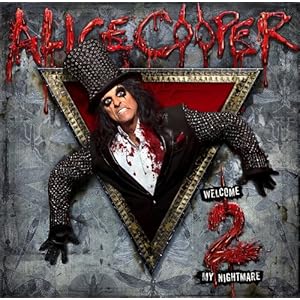
Music Review: Alice Cooper - Welcome 2 My Nightmare


Alice Cooper's place in rock and roll history was assured long before his massively overdue induction into the Rock And Roll Hall Of Fame earlier this year. Let's face it, were it not for Alice Cooper — for better or for worse — there would never have been a Kiss, a Twisted Sister, a Marilyn Manson, or a Slipknot.

Not that any of these latter day "shock rock" bands ever possessed Alice's unique gift for combining the gender bending, parentally horrifying social outrage of the day with a great pop hook of course (Twisted Sister probably came the closest with "We're Not Gonna' Take It"). For that, one only needs to reference original Alice Cooper classics like "I'm Eighteen," "Be My Lover" and "School's Out."

What Alice's biggest fans also know however, is that by the time of his first solo album, 1975's Welcome To My Nightmare, the party was pretty much over.

Not that the original Nightmare isn't a great album.

In fact, when viewed from the rear window of time, the original Welcome To My Nightmare album holds up remarkably well. The makeshift band of studio hot shots assembled for that album — guys like guitar ace Steve Hunter — certainly had the chops. The songs, like "Black Widow," "Department Of Youth" and Nightmare's lone hit "Only Women Bleed" weren't half bad either.

But they never really recaptured the original spirit of the great, though occasionally ragged original Alice Cooper Band as heard on the string of early seventies albums that made Alice a star in the first place. The fact is, what followed the original Welcome To My Nightmare album, was a brief run of TV movies with the likes of octogenarian Helen Hayes, appearances on the celebrity golf circuit and shows like Hollywood Squares. Sadly, this was followed shortly after by a fall from grace marked dramatically by years in and out of rehab recovering from a very severe booze habit which very nearly took Alice Cooper's life.

You wanna' talk about an Alice Cooper album demanding a sequel now? That discussion begins and ends with 1973's masterpiece Billion Dollar Babies.


The best news about 2011's long-awaited Nightmare sequel is that it reunites Alice with original AC band members Neal Smith, Dennis Dunaway and Micheal Bruce for the first time in decades. They still sound pretty great here too. Songs like "When Hell Comes Home," serve as a musical reminder of what brought Alice's shock-rock act to the dance in the first place. Longtime Alice Cooper producer Bob Ezrin is also back on board, and the songs on this album are some of Alice's best in years.

Sadly, the idea of great hard rock songs with catchy hooks probably comes a few decades too late for the present-day musical climate of here today, gone tomorrow pop stars. Speaking of which, Ke$ha also makes an appearance on this album on the song "What Baby Wants" — which is something I am still trying to wrap my original Alice Cooper fan around.


All minor quibbles aside, Welcome 2 My Nightmare is easily the most listenable Alice Cooper album in years, and proof positive that when the old ghoul puts his mind to it, he can still deliver the goods.

In the meantime, diehard fans like me are still await that Billion Dollar Babies sequel.

This article was first published at Blogcritics Magazine.

Friday, September 9, 2011

ELP 2011: Bring On The Prog, Dude

Music DVD Review: Emerson Lake And Palmer - 40th Anniversary Reunion Concert


Emerson Lake and Palmer is a band that has been — unjustifiably in my own opinion — universally shat upon by rock critics over the years. Personally, I have never quite understood the hostility.

Back in their brief, early seventies heyday, ELP provided the blueprint for the progressive rock power trio format later employed to varying degrees of success by bands ranging from imitators like Triumvirat (not so much), to those who really took the ball and ran with it (Rush and the latter day Phil Collins led version of Genesis).

What most people don't remember though, is that back in the early to mid-seventies, ELP ruled. With a string of mostly great — though occasionally indulgent — albums like Tarkus, Trilogy and especially their masterpiece Brain Salad Surgery, ELP held the undisputed title of the greatest "musician's band" on the planet.

As most of their most diehard fans already know, the party was pretty much over when ELP released the Works Volume 1 set (three sides of solo albums, plus a fourth side of group tracks), followed by the mostly outtakes Works Volume 2 set. Much ego-wrangling followed, culminating in the particularly wretched Love Beach album, and their eventual breakup.

But back when ELP inspired the same sort of debate amongst keyboard enthusiasts between Emerson and Rick Wakeman of Yes, as Beck Vs. Page did amongst guitarists, these guys were the real deal. As for Carl Palmer, and with all due respect to Rush's Neil Peart and Porcupine Tree's Gavin Harrison, no one outside of perhaps Keith Moon has better defined the term "monster drummer" before or since.

That said, ELP's 40th Anniversary Reunion Concert DVD is mostly a nostalgia trip. It also has a few very noticeable flaws sound wise in the early going, particularly during "The Barbarian." Here, the band don't seem to be playing as a tight unit (although they do eventually find their place on the later tracks). Emerson's mike also noticeably cuts out.

Even so, the crowd doesn't seem to care.


The guys all look mostly good (although former groupie magnet Greg Lake has gotten pretty fat), and they still can play their asses off. Which is what really matters in a DVD like this. When Lake bellows out the improbable "Karn Evil 9," lyrics rhyming "gypsy queen" with "vaseline" and "guillotine," any original critical nitpicks are reduced to irrelevancy. ELP are recapturing a moment in time here, and God bless em' for it.

As the concert progresses, and the band falls into a familiar groove, all the theatrical stops are pulled out. Cannons are fired during the otherwise ponderous "Pictures At An Exhibition." Emerson reprises the knive wielding, keyboard destroying theatrics of his nationally televised performance at 1974's California Jam, and Carl Palmer turns in a spellbinding solo on his revolving drum kit.

It's all enough to make one yearn nostalgically for the days of pretentious, seventies indulgent prog-rock. Sign me up, Scotty.

This article was first published at Blogcritics Magazine.

Friday, September 2, 2011

Praying For My Little Brother Steve


This is the only known picture I have of my little brother Steve Boyd.

I got it from Facebook. Of all of my brothers, Steve is the one I have most closely related to myself. He is a kind, sensitive guy who just can't seem to cut himself a break (sound familiar?). Earlier tonight, I learned that Steve was involved in a horrible traffic accident where a person was tragically killed. Apparently, Steve was also drunk.

Whatever you might think of Steve, I know that amongst a band of Boyd brothers that have a well earned reputation as bad boys, Steve has a great heart, and this is probably eating him up inside far more than the extended jail time he is undoubtedly facing now. We Boyd boys seem to have a particular tendency for drawing out the devil (whether intentionally or otherwise), and from what I know, Steve has had a particularly bad go of it in recent years (losing a daughter among other things).

What I also know is that the fact that Steve may have been responsible for taking another person's life is probably eating him up more inside far more than the extended stay in a jail cell he now undoubtedly faces.

This is a good kid who made a horrible mistake, folks. Honestly, Steve is not a bad guy.

And knowing Steve as I do, I am quite sure he believes he deserves everything that is coming to him. But what I also know is that he didn't mean it, and if he could rewind time and take it back, he would so in a heartbeat.

Please pray for my little brother Steve. He really is a good kid. Thank you.

Thursday, September 1, 2011

The Joyous Rock And Holy Roller Noise Of Kings Of Leon


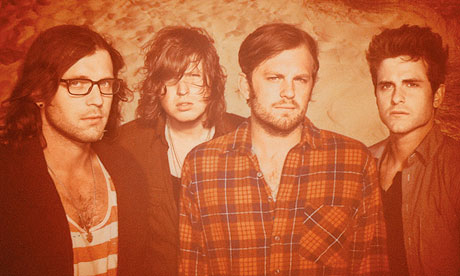
Sometimes it takes something like watching a movie to really "get" an artist or band. This week, after watching multiple screenings of Stephen C. Mitchell's Talahina Sky: The Story of Kings Of Leon documentary on Showtime, I think I may have finally gotten the appeal of the post-modern, southern fried, gospel tinged rock of the Followill boys.

Better late than never I reckon. The thing is, it's still not for the reasons you might expect.

As a live band — despite their recent graduation to headlining arenas and stadiums — Kings Of Leon have yet to take that next big step which elevates them to the big leagues as a "must see" attraction on the same level as a Bruce Springsteen, U2, Radiohead or even Coldplay.

In fairness though — and based on the all-too-brief concert clips in this film — Kings Of Leon still rock convincingly enough. But outside of the big lights and production values that come when your albums begin to do the platinum business KoL's have, there is little difference between their current use of stagecraft, and the not-quite-ready-for-prime-time band I saw open up for Bob Dylan nearly a decade ago.

With a few notable exceptions (like the gorgeous "Talahina Sky," which closes this film on a perfectly bittersweet note of uncertainty that I'm sure was completely intentional), Kings Of Leon's songs also still fall in the mostly very good to just above average range.

What does come through about Kings Of Leon in Talahina Sky though, is the fact that this is an extremely earnest and thoughtful, sincere and likable bunch (especially Caleb). This is a band who rose from very poor and humble beginnings to their current (if somewhat tenuous) status as perhaps the last truly great American rock and roll band.


Fan or not, Talahina Sky: The Story of Kings Of Leon is not only a film that will leave you rooting for this band to carry on — but one which will stick with you for days on end after seeing it.

The Kings Of Leon story is already well known to those who follow such things. The Followill brothers (Caleb, Jared, and Nathan), along with cousin Matthew, are the rock and roll spawn of a southern Bible Belt family led by tent revival preacher Ivan Followill. With no apologies, KoL left that Red State, Pentecostal existence behind to conquer the music world as international rock stars. Except, at least according to this uncommonly honest and unguarded rock-doc, maybe they didn't leave it back in the church at all. Not completely, anyway.


The story of rock and roll artists coming from church backgrounds, and then going on to a life long struggle between the pleasures of the flesh and the joys of the spirit is of course nothing new — especially in the deep south. Artists ranging from Elvis and Johnny Cash, to Jerry Lee Lewis and Little Richard have famously fought this spiritual battle between a higher calling and the so-called "devil's music" throughout their careers, and often in quite public fashion. In the case of Kings Of Leon front man Caleb Followill, he even aspired to follow his father's footsteps into the pulpit from an early age.

In Mitchell's Talahina Sky: The Story of Kings Of Leon, we see the way this inner struggle between flesh and spirit can exact a profound psychological toll, in up close and personal fashion.


This is possibly the closest thing to a "real time" story of this type ever made, and although the notoriously hard drinking Kings Of Leon aren't a band particularly known for their musical proselytizing, this film shows they haven't left their faith completely behind either. In Caleb's case, this inner turmoil seems to manifest itself most dramatically when he drinks — which he does often here.

In light of recent events which have cast some question over the future of Kings Of Leon as a band, Mitchell's film is also much more than just the latest exercise in self-aggrandizing rock-doc puffery. Taken in this context, it is actually quite the eye-opener.

Much of the film is framed against the backdrop of the annual Followill family reunion picnic, which takes place somewhere on a private patch of creekside land tucked deep inside the furthest boonies of Oklahoma. Here we see the Followill boys engaged in wholesome family activities like group prayer, pitching horseshoes, fishing for crawdads, and drinking plenty of hooch.

This is a tight knit clan of cousins, uncles, grandmas and grandpas that are also clearly quite proud of their most celebrated sons, the Followill boys of Kings Of Leon. Even so, fame is still defined by some of these folk as meaning being referenced on the game show The Price Is Right.


With a colorful cast of friends and relatives that seems to have sprung straight out of some backwoods trailer park, the Okie-authenticity of these characters is hard to miss. Good old boys like Uncle Cleo (who died of cancer shortly after this film was completed) and roadie cousin Christopher "Nacho" Followill make nighttime shots gathered around a raging campfire eerily reminiscent of a white supremacists gathering (minus the racist elements, of course).

Numerous home movies taken from the Followill boys childhood provide the clearest look at the real backstory here though. At times, these private family reels seem to be pieced together without much regard for continuity, giving the film the occasional feel of patchwork. But taken together, they tell what may be the most crucial element of the overall Kings Of Leon story.

We see Caleb and Nathan as squeaky clean church boys singing hymns for the congregation, scant years prior to their transformation into boozing, worldly rock stars. But we also learn that when their father went from preaching the gospel at revival meetings to hitting the bottle at local beer joints, it took a heavy emotional toll on the Followill boys, and on their faith.


At this point, any sheltered illusions the Followills had of a two dimensional world consisting only of saints and sinners were pretty much shattered. Caleb — remember, this is the sibling who once aspired to become a preacher himself — in particular seems to continue struggling with these lingering demons.

In one of Talahina Sky's more telling moments, we hear Caleb say "As soon as I got a record deal...I knew I was going to hell." There are also numerous scenes cut throughout the film of what appears to be a recent one-on-one interview between Caleb and the unseen camera man. Here, Caleb drunkenly rambles on about the band, his life and his mortality, as he proceeds to smoke and drink literally everything in sight.

We also see Caleb fighting with his bandmates in the studio, at one point mercilessly berating cousin Matthew over a guitar part, and finally being read the riot act by brother Nathan. In the very next scene, we see the band come back together in a circle of prayer, with all transgressions apparently forgiven (for the moment, anyway).


With the recent cancellation of an American tour following Caleb's strange outburst during a concert in Texas putting a question mark on the band's future, Talahina Sky places these events into a much larger context. Their current hiatus has been officially explained away as a much needed break and an opportunity for Caleb to heal up his vocal chords.

But Twitter posts from the band members themselves have done little to quiet the Caleb rehab rumors out there. What is clear in watching this film, is that this is a band who are collectively dealing with considerable issues, and that Caleb himself seems to be wrestling with a personal crisis of conscience and faith.

But what is also clear is that these are four very likable, mostly good, clean Christian boys, with four very distinct personalities. Jared is the most "rock star" of the group, Nathan is the one who is "all business, all the time," and Matthew, as seen here anyway, seems to be the adorable goofball. Caleb, of course, is the earnest thinker who carries the weight of the world on his shoulders, which may at least partially explain his searching for the answers inside of a bottle.


Fans of this band will find that Stephen C. Mitchell's Talahina Sky: The Story of Kings Of Leon provides at least some of these answers (not to mention some pretty great music). It is also the sort of rare, unvarnished insider look into the private lives of jet-setting rock stars — complete with warts and all — that makes you wonder what possessed the band members to sign off as executive producers for this project. Ultimately though, this is a film that makes a great argument that some rock stars are just as human as the rest of us — at least if they happen to be the Kings Of Leon anyway.

I'll be rooting for them. Talahina Sky: The Story of Kings Of Leon is currently playing on cable television's Showtime network. You'll find playing times by checking for them at Sho.com.

This article was first published at Blogcritics Magazine.

Thursday, August 25, 2011

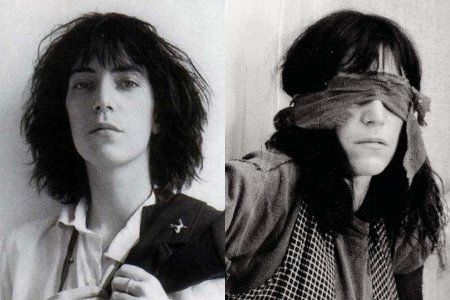
Patti Smith's Outside Society: A Greatest Hits Set From An Artist Who Didn't Have Any

Music Review: Patti Smith - Outside Society


If you are looking for the definitive overview of Patti Smith's legendary career, the just released Legacy Recordings compilation Outside Society is not it. The closest thing out there to that sort of comprehensive retrospective of Smith's groundbreaking work, complete with prerequisite rare tracks and alternate takes, remains the Land (1975 - 2002) compilation — and that set focuses mainly on her years with Arista Records.

However, as a brief introduction to Patti Smith, Outside Society works well enough as a sampler. You might even call this album a kind of greatest hits set from an artist who really didn't have any (save for "Because The Night," the collaboration with Bruce Springsteen that remains her most famous song).

Outside Society (which takes its name from a lyric to her song "Rock And Roll Nigger") is mostly notable because it draws equally from all phases of Patti Smith's 35 years as a recording artist. It brings material from both the Arista and Columbia Records eras together for the very first time on a single disc.

The only real complaint here, is that by following the sort of "greatest hits" mentality that apparently went into the making of this collection (despite the active participation of Patti Smith herself), Outside Society really only skims the surface. The way that longer, more expressive pieces like "Birdland" and "Land" (from Patti Smith's brilliant 1975 debut album Horses), are glossed over in favor of shorter, more radio ready songs is likely to be a disappointment to long time fans.

It is tone poems like these that helped make Patti Smith's reputation as punk rock's original reigning queen of spoken word, stream of consciousness poetry in the seventies. Here, they are overlooked to focus on more traditionally structured rock songs like "Because The Night" and "Summer Cannibals," as well as her cover versions of songs like Kurt Cobain's "Smells Like Teen Spirit" and Roger McGuinn's "So You Want To Be A Rock And Star." In that respect, Outside Society really only presents one side of this multifaceted artist.

Even so, there is still a lot to like here. Outside Society covers all the bases in terms of being a well rounded collection of the hits. From "Gloria" and "Because The Night" to "Dancing Barefoot" and "People Have The Power," the song selection does a great job of gathering her career highlights together on a single disc.


Patti Smith's poetic talents do not go completely unnoticed here either. The inclusion of songs like "Pissing In A River," "Free Money" and "Aint' It Strange" accomplishes that trick nicely (if too briefly), as does her blazing performance of "Rock And Roll Nigger" (which is thankfully unedited here). Patti Smith's gift for interpretation is best showcased here with her version of Cobain's "Teen Spirit," which is broken down into a minimalist dirge that is simply spellbinding.


Longtime fans will also appreciate the inclusion of liner notes written by Patti Smith herself, where she offers her own impressions on each of the eighteen songs in this collection. As a career defining anthology, Outside Society is anything but complete. For that, fans would be far better served with Land, or by just picking up a copy of Horses (still her best). But for first timers in search of a quick test drive, you could do a lot worse than this.

This article was first published at Blogcritics Magazine.

Friday, August 19, 2011

Muddy Waters: Aggro Rockers Puddle Of Mudd Paddle Into The Seventies

Music Review: Puddle Of Mudd - Re:(disc)overed


Under normal circumstances, Puddle Of Mudd's brand of aggro-metal isn't the sort of thing that really floats my boat. Crap, I don't even really like these guys. But this album isn't exactly your typically tattooed trip to the mosh-pit either.

On Re:(disc)overed, this mid-western band of hard rock numbskulls venture into the muddy waters of the seventies, covering classic tunes by everyone from bands you'd expect like AC/DC and Led Zeppelin, to the more unlikely choices of Elton John and Neil Young. With vintage tracks from the likes of Free and the James Gang rounding things out, the playlist here comes straight from a seventies FM rock radio programmer's log, and serves as an instant reminder of why that format is so sorely missed today. It certainly beats the hell out of the Black Eyed Peas, Britney and Bieber.

The question here is, do the Mudd boys pull it off? Surprisingly, the answer is mostly yes.

In keeping with the seventies spirit, the cover art of the CD is a celebration of the vinyl album format. The front sleeve features an old record player cut from the original RCA Records "Nipper" days, and the CD itself is designed to look like a vinyl LP. When you open up the seventies style foldout cardboard sleeve, it even smells kind of like an album.

Mudd's take on the Stones' "Gimme Shelter" maintains this vibe of authenticity, right down to soulful backing vocals that do a nice job of duplicating Merry Clayton's from the original version. The band also adds just the right touch of nineties hard rock energy here, without ever overdoing it to excess. So far, so good.

Likewise, a nice version of Neil Young's "Old Man" remains very true to the original, even going so far as to duplicate the pedal steel and banjo. The one minor quibble here is the chorus of background vocals, which sound just a bit overproduced.


The thing that gives each of these tracks a fresh sounding quality though is Wes Scantlin's vocals, which display a bit of the drawl normally associated with southern rockers like Lynyrd Skynyrd. Come to think of it, these guys probably would've done a bang-up job covering somebody like Skynyrd. Maybe, next time.

This approach also works well on a version of "Stop Draggin' My Heart Around," where Scantlin pretty much nails the Tom Petty part and guest vocalist BC Jean turns in a likewise near perfect Stevie Nicks. Scantlin also does a very pretty sounding, if just ever so slightly overdone "Rocket Man" by Elton John.

By the time of Steve Miller Band's "The Joker" however, things start to wear a little thin. There is a growing feeling that in their obvious affection for these songs, they are also playing it a little too safe. At this point, you really start to wonder if Puddle Of Mudd is going to bring something a little more original to the mix.


Fortunately, the Mudd-Pudds are much more in their element when they crank up the amps to take on seventies hard rock chestnuts like AC/DC's "TNT," Billy Squier's "Everybody Wants You," and Free's "All Right Now." The band sounds right at home here, having fun and rocking out like a band of stoner kids headlining their very first high school kegger.

Despite a tendency towards safe arrangements and occasional overproduction (particularly with the backing vocals), Puddle Of Mudd's Re:(disc)overed is ultimately saved by the fact that it was clearly a labor of love for them to make.

This is the sound of a bunch of grown men channeling the sounds of their misspent classic rock youth, and obviously having a blast. Which translates into a very fun, if slightly guilty sounding pleasure for the rest of us.

This article was first published at Blogcritics Magazine.

Thursday, August 11, 2011

Alice Cooper's New Nightmare: The Original Billion Dollar Babies And...Ke$ha?


Forget about Led Zeppelin and Pink Floyd. The real reunion that fans of 70s classic rock least expected to ever see happen was the high heeled boys of the original Alice Cooper band getting back together. Well don't look now, but in just a few weeks, on September 13, hell — no, not the fake Eagles version, but the actual, real hell — is about to freeze over.

On that day, Universal Music Group will release Alice Cooper's long awaited sequel to his classic 1975 album Welcome To My Nightmare. More than thirty years in the making, Welcome 2 My Nightmare caps off an amazing year in Alice Cooper's already legendary career.

In a year which has already seen Alice receive his long overdue induction into the Rock & Roll Hall Of Fame, Welcome 2 My Nightmare reunites Alice with the surviving members of his original, greatest band for the first time since 1973's Muscle Of Love.

To put this in its proper perspective, the original 1975 album Welcome To My Nightmare was Alice Cooper's first album without the guys responsible for his brief, but meteoric ride — roughly 1972-1974 — from freak sideshow cult status, to arguably the biggest selling album artist and concert attraction in the entire world.
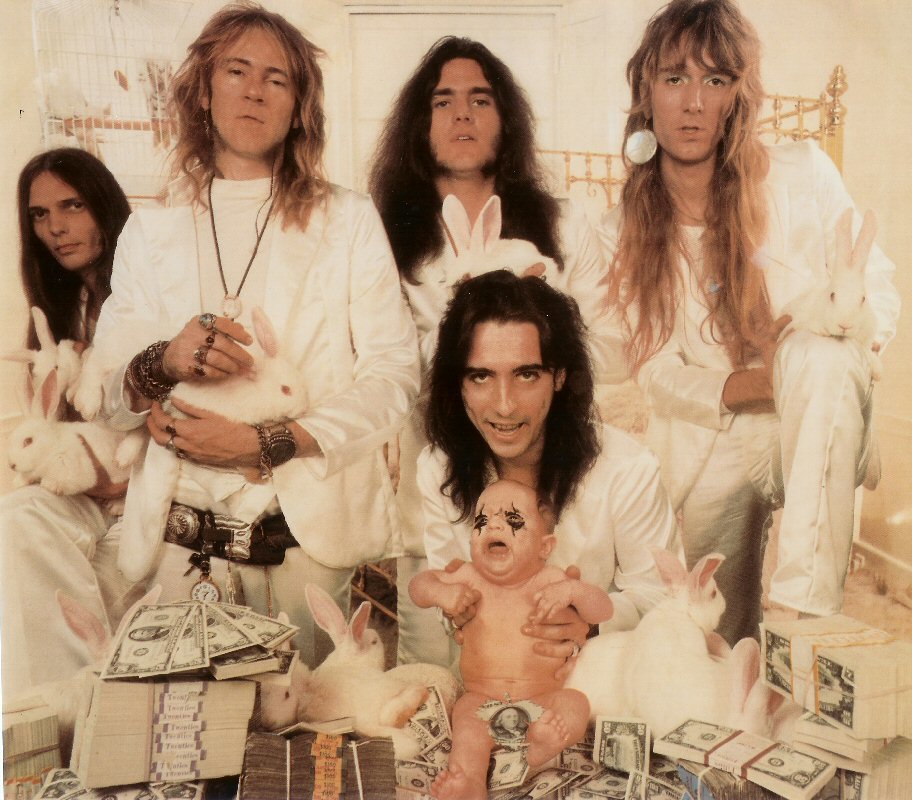
In those two short years, the albums Love It To Death, Killer, School's Out, and especially 1973's Billion Dollar Babies firmly established the original Alice Cooper band as not only the biggest — but also the most dangerous — rock and roll band on Earth.

In the process, the band's gender bending persona and elaborate, often blood dripping stage shows — where Alice was routinely executed onstage every night by simulated hanging or guillotine — established the template for Kiss, Marilyn Manson, Slipknot, White Zombie, and virtually every other theatrical shock rock act which has come ever since. Not a one of which has yet to top the original.

The fact that Alice Cooper's reunion with this band comes on the sequel to the album that marked their breakup is somewhat ironic. While Welcome To My Nightmare was both a commercial success at the time and a landmark in its own right, most fans agree it also marked the beginning of an artistic decline that was further accelerated by Alice's own personal, and long since well documented demons.


Welcome 2 My Nightmare reunites Alice Cooper with his original Billion Dollar Babies, including bassist Dennis Dunaway; drummer Neal Smith; and guitarist Micheal Bruce (who also co-wrote some of Alice's biggest hits like "I'm Eighteen") on three tracks, including "When Hell Comes Home." Unfortunately, the late guitarist Glenn Buxton is the lone member of the band who didn't live to see this historic reunion. The album is also produced by Bob Ezrin, the man behind the controls for all of Alice Cooper's original 70s classics.

The album also includes contributions from guitar great Steve Hunter (best known for his work on the original Nightmare album, as well as on Lou Reed's classic live Rock And Roll Animal album), and a somewhat unlikely appearance by teen pop sensation Ke$ha on the perhaps appropriately titled "Disco Bloodbath Boogie Fever."


Of Ke$ha's contribution, Alice says "I think a lot of my audience is going to go 'KE$HA!?', but she probably wrote the most wicked lyrics in the song – we had to rein her in. I like people to know that just because artists are put in a pigeon hole, that doesn't mean that's what they are. Give people a little room.”

Ke$ha or not, we like what we have heard thus far. From the doomy rock of "When Hell Comes Home," to the surprisingly pretty "Something To Remember Me By" (Alice's emotional range as a vocalist has long been his best kept secret), Welcome 2 My Nightmare sounds a whole lot like the classic Alice Cooper album fans have waited decades for to us. Look for a more full review here on these pages soon.

Alice Cooper's Welcome 2 My Nightmare arrives in stores and digitally on September 13.

Welcome 2 My Nightmare Track Listing:

1. I Am Made Of You
2. Caffeine
3. The Nightmare Returns
4. A Runaway Train
5. Last Man On Earth
6. The Congregation
7. I'll Bite Your Face Off
8. Disco Bloodbath Boogie Fever
9. Ghouls Gone Wild
10. Something To Remember Me By
11. When Hell Comes Home
12. What Baby Wants
13. I Gotta Get Outta Here
14. The Underture

This article was first published at Blogcritics Magazine.