Saturday, November 14, 2009

MK-Ultra: The C.I.A., The Beard, The Mad Scientist And LSD

Graphic Novel Review: The Sinister Truth: MK-Ultr
a by Jason Ciaccia And Aaron Norhanian

The stories have been around for decades. Government Black-Ops, assassinations, and mind control, all fully sanctioned and approved by the highest levels of the United States Government, and carried out by the shadowy spies and spooks who operate within the cloak and dagger world of our own Central Intelligence Agency.

That much is pretty much common knowledge. But what of some of the wilder stories making the rounds among the conspiracy theorists and the other fruit baskets out there?

That the C.I.A. conducted horrific medical experiments on unsuspecting operatives and civilians alike — using LSD, brain implants, and worse — in an apparent attempt to transform their test subjects into brain-dead, yet obedient walking zombies?

As it turns out, the conspiracy nuts may have got that one right after all. Fortunately for those of us inquiring minds who want to know, but haven't the time or inclination to sift through the 18,000 or so documents about such things as Project MK-Ultra de-classified through the Freedom Of Information Act, writer Jason Ciaccia and illustrator Aaron Norhanian have provided us with the next best thing. They've turned it into a comic book.

Using the Graphic Novel medium, The Sinister Truth: Project MK-Ultra tells the entire story of the C.I.A.'s infamous mind control project, in both an easy to follow narrative as well as with striking, often graphic images that are a cross between the wigged-out psychedelic art of someone like R. Crumb, and the pornier cartoons you'll find in the back pages of Playboy. Given the subject matter, it makes for a potent and appropriate mix.

Conspiracy fodder aside, the story itself is wilder and further out there than anything you'll read in an Ian Flemming novel — the James Bond author was sought out for advice about the "Cuba problem" by none other than JFK by the way.

There's a colorful cast of characters including a Mad Doctor, "The Beard," and your usual assortment of garden variety government spooks. Yet every bit of it is backed by government documents verifying the story, many of which are annotated at the bottom of the pages, while others are reproduced in the back of the book.

The story begins at the height of the Cold War, and with America's newly inherited "Cuba problem," in the form of one communist Fidel Castro parked just ninety miles off the coast of Florida. Needless to say, this has Uncle Sam understandably concerned, and the C.I.A. is dispatched to handle "the Beard."

Which they attempt to do exactly 638 times, in a series of comically failed assassination plots, each of which seems to be more ridiculous than the last. The plots to kill Castro include Operation Groucho (exploding cigar), Operation Stuffed Mushroom (Death by fungus infected scuba gear), and Operation Conch Shell (exploding Conch Shell).

Honestly, you couldn't make this stuff up if you were writing episodes of Get Smart. What gives the humor here its darker edges though, is the fact that it's all true.

Enter Dr. Sidney Gottlieb, a mad scientist straight out of Frankenstein territory if ever there was one, and as head of the C.I.A.'s chemical division, the man responsible for MK-Ultra (or the agency's mind control project). In his efforts to create the perfect obedient assassin, Gottlieb goes to pretty much any extreme necessary to turn the human mind into his personal petri dish — including brain implants, radiation, and mind-bending drugs like LSD. Lots and lots of LSD.

As part of a new plot (Operation Goodtimes) to discredit Castro by dosing him with LSD before a speech to his country, Gottlieb dispatches "Bob," a particularly brain-damaged operative to do the dirty work. As it turns out though, Bob's brain has become so completely turned to jelly by Gottlieb's diabolical handiwork, that he ends up doing things like beheading a hotel maid. All of which are depicted in the gloriously gory black and white images here.

The Sinister Truth: MK-Ultra is not for the timid or the squeamish. But it does its job of condensing one of the darker and under-reported chapters of U.S. intelligence history into an entertaining, easily digested narrative with the sort of psychotronic comic art that fits the subject like a black glove. The book can be ordered by going to the Sinister Truth website.

Thursday, November 12, 2009

Macca Covers All The Bases On This Night At The Ball Park

Music Review: Paul McCartney - Good Evening New York City (2 CD/1 DVD Edition)

A new live album from Paul McCartney is really nothing new at all anymore. Ever since he began playing the old Beatles tunes again, Macca's been cranking the live CD and DVD packages out at what seems to be a near annual rate.

What makes Good Evening New York City something special though, is probably more its historical value than anything else. That, plus the fact that in addition to the usual setlist with "Hey Jude," "Band on The Run," "Live And Let Die" and the rest, McCartney offers up some rarely played choice cuts, as well as versions of newer songs that rock more than they really have any right to.

The occasion of Good Evening New York City is last summer's three-night stand inaugurating New York's Citi Field, some 45 years after the Beatles played the site of the former Shea Stadium.

In this 2 CD/1 DVD package — it's also available in a deluxe edition with a bonus disc of Macca playing Let It Be style on the roof of the Ed Sullivan Theatre — the eternally young McCartney and his crack band are captured in a nearly three hour, 33 song set that is like a trip down memory lane.


From the Beatles to Wings to the Fireman, no base was left uncovered on this night at the new ball park — not bad for a guy well into his sixties. I can't imagine anyone who was actually there leaving the stadium feeling they got anything less than their moneys worth on what I'm quite sure was a pricey ticket.

Although the exact same setlist is captured on both the two CDs and the single DVD, there are some interesting differences here. The CDs feature none of the in-between song banter seen and heard on the DVD for one thing, so it plays more like a non-stop performance on the audio portion.

The DVD on the other hand plays like so many of McCartney's other live concert films do. There are nearly as many shots of audience members hugging, holding up signs, and dancing in the aisles as there are of the band playing — which on past DVDs has proved occasionally frustrating.

On The Space Between Us for example, nearly all of "Hey Jude" was cut to make room for an interview with a family of fans at about the mid-song point. Fortunately, "Hey Jude" gets a complete airing here, in all of its sing-along glory. And I don't care what anyone says, I could hear "Jude" on a thousand concert recordings, and it still gets me every single time.

On "I'm Down," the DVD also splices back and forth between the Citi Field performance, and the Beatles doing it 45 years ago at Shea. As much as that might sound like a potential disaster, they actually pull this trick off. On the CD however, they stick to the version from the 2009 concert.

Those who already own some of Macca's past live recordings, will want to get this one if for no reason than the ferocious version here of the rarely played "Day Tripper." Other highlights include surprisingly fresh takes on recent tracks from Memory Almost Full ("Only Mama Knows," "Dance Tonight") and The Fireman ("Highway," "Sing The Changes"). Billy Joel also shows up for "I Saw Her Standing There."

If most of the rest seems more than a bit familiar from McCartney's numerous other live albums — well, that's because it is. Even so, Good Evening New York City is probably the most well done of the lot to date. In stores November 17.

Monday, November 9, 2009

The Fourth Kind: Part Close Encounters, Part Exorcist, And 100% Not Real

Movie Review: The Fourth Kind

For those who take the subject matter seriously, it has been a long held belief that Hollywood doesn't have a very good track record when it comes to films dealing with the subject of UFOs and alien abduction.

In fact, most, if not all of the big-screen films based on actual UFO and alien abduction case files — from Communion to Fire In The Sky — have been disasters from the perspective of those who have either investigated or actually experienced such encounters.

In the case of Communion, author and contactee Whitley Strieber is portrayed in such a way as to suggest the only "close encounter" he has experienced is one of the psychotic kind. To anyone familiar with the abduction case of Travis Walton, there are entire scenes of his story as told in Fire In The Sky that simply never happened.

Like those films, Universal's The Fourth Kind purports, and in fact goes to great lengths to convince the viewer that it too is based on actual events — except that it isn't. The only back story here is rather the result of one of those viral marketing campaigns which most recently worked so well for Paranormal Activity.
The Fourth Kind centers on a series of unexplained disappearances occurring in Nome, Alaska (that part is real) which may be tied to alien abductions (that part isn't). Milla Jovovich plays Dr. Abigail Tyler, a psychiatrist investigating the cases. The title refers to what ufologists call a close encounter of the fourth kind, which involves alien abduction. Steven Spielberg's famous film Close Encounters Of The Third Kind refers to contact. This movie should in no way be confused with Spielberg's classic though.

In the opening scene, Jovovich appears as herself, and explains she will be portraying Tyler, and that the film includes actual audio and video footage from Tyler's case files. This illusion continues with director Olatunde Osunsanmi interviewing the "real" Tyler, and then throughout the film with split-screen images of Jovovich and the other Abigail Tyler often simultaneously reciting and acting the same lines and scenes.

As a storytelling device, it's a clever one and does seem to lend an air of authenticity to the story, as the events, some of which are pretty terrifying, unfold on screen. The trick is, however, revealed for the ruse it is, when some of the actors portraying the abductees are actually more convincing at expressing terror than their counterparts in the "real" footage. One scene which purports to show an abductee driven by madness to murdering his family, in particular, exposes the parlor tricks at work here.

Even so, The Fourth Kind plays this card right up until the end of the movie. It's a clever enough idea to a point, but one can only willingly suspend disbelief for so long, until it just becomes a distraction. By the time phenomena more closely resembling demonic possession than anything from classic alien abduction cases begins to manifest, the thin strings holding the plot together completely unravel.

What's left is an uneven mess that plays like one part Close Encounters multiplied by several times The Exorcist. The cast mostly gets an A for effort in a lost cause — particularly Jovovich and the actress portraying the "real" Dr. Abigail Tyler, and I'll even give director Osunsanmi credit for a noble try at something a little different as far as his storytelling method goes.

At the same time, though, The Fourth Kind loses points for trying a little too hard to push a story that simply doesn't hold up. Studio-created websites aside, a Google search for "Nome alien abductions" turns up little to support it.

While there have been some unexplained disappearances in Nome over the years, F.B.I. investigations suggest these may have been due more to bad weather, tough terrain, and close encounters of the alcoholic kind.

As escapist entertainment, The Fourth Kind is harmless enough. Even so, it fails to redeem or change Hollywood's poor track record for telling a good alien abduction story. Sadly, that record remains very much intact.

Saturday, November 7, 2009

Is Aerosmith Finished?: Steven Tyler Walks His Way Out

Steven Tyler, the eternally young 61 year old lead vocalist for Aerosmith has apparently decided to walk his way right out of the mega-successful American rock band.

According to numerous reports published today on the internet, Tyler has left the group to pursue a career as a solo artist. Guitarist Joe Perry says Tyler quit Aerosmith following a concert in the United Arab Emirates Abu Dhabi.

"Steven quit, as far as I can tell," Perry told the Las Vegas Sun. "I don't know anymore than you do about it. I got off the plane two nights ago. I saw online that Steven said that he was going to leave the band. I don't know for how long, indefinitely or whatever."

Aerosmith are of course no strangers to internal feuding within the band, often related to widely reported drug abuse in the past — and earning Tyler and Perry their infamous nicknames "The Toxic Twins" during the band's early to mid seventies years. Most famously, Perry left Aerosmith in the late seventies to form the Joe Perry Project, while Tyler carried on with replacement guitarists on the album Rock In A Hard Place, scoring a moderate hit with the song "Lightnin' Strikes."

Perry rejoined Aerosmith for the Done With Mirrors album, and with the newly "drug-free" incarnation of the band, went on to renewed success in the eighties and nineties with albums like Permanent Vacation and Pump. A remake of the band's "Walk This Way" with veteran rappers Run-DMC further re-established Aerosmith as one of the top bands in rock and roll.

Just this past summer, Aerosmith had to cancel a number of dates on their co-headlining tour with ZZ Top after Tyler injured himself after falling from the stage at a concert. The band also recently postponed an album planned for later this year.

In a conversation with Peter Makowski of Classic Rock magazine, guitarist Brad Whitford seemed to leave the next move for the veteran hard rockers wide open. Indicating the band would meet soon to discuss future plans, Whitford seemed to leave the door open for either packing it in, or possibly carrying on with a new lead singer.

“Nobody could replace Steven or imitate him – he’s one of a kind. But if somebody was willing to do it and the chemistry was right, why not?,” Whitford said.

It's certainly clear that Perry prefers that some form of Aerosmith will continue, with or without their lead singer and most visible member. "Right now I'm adjusting to how we're going to go on," Perry said.
The Rockologist: The Thought, The Thump, And The Poetry

It's a funny thing about rock stars.

You'd think that so many of them have the world on a string, the tiger by the tail, or whatever you'd otherwise choose to call it.

Let's talk first about the lifestyle, or at least what we know about it as outsiders living vicariously through reading about it in the Random Notes section of Rolling Stone, or maybe seeing it in the nude pictures of Keith Richards lying on some beach in France we see showing up on the Internet.

And just for the record, if that particular image grosses you out, you are by no means alone.

Anyway, you'd think a life of selling millions of records, living in English countryside mansions, dating 20-something year-old super models into your 60s, and pretty much having the world as your personal oyster would be enough, right? Well, think again.

You see, for the select handful of rock royalty who have actually scaled the top of the mountain, there remains that one elusive final hill to climb, and that my friends, is artistic redemption.

It's one thing to top the charts on Billboard, but it's quite another to have the sort of pretentious types who sip wine at art galleries poring over your every word as though it were manna from heaven itself.

Even so, many have tried.

For rock stars like Mick Jagger, David Bowie, and Sting, for example, acting in films has represented the the most obvious avenue towards this type of validation, and as could be expected the results have been decidedly mixed.

Jagger, most notably, is back singing "Jumping Jack Flash" for the umpteenth time after getting mixed reviews in movies from Performance and Ned Kelly, to Freejack. Bowie did a great job playing himself in The Man Who Fell To Earth, and the less said about Sting acting in movies like David Lynch's production of Dune the better.

Of these, Sting alone refuses to give up however. He's spent the better part of the last two decades trying to reinvent himself as a solo artist dabbling in everything from jazz to Gregorian chants when all most of us want to hear is "Roxanne" with the Police one more time — and not have to pay 300 bucks a ticket for the privilege of doing so, I might add.

In so doing, Sting joins the likes of people like Peter Gabriel, Paul Simon, and especially David Byrne who seem hellbent on cramming culture down the throats of fans who would much rather hear "Burning Down The House" or "Shock The Monkey" one more time.

You know what I mean? Good.

Because rather than piss off all of the South African or Brazilian union musicians who play on records by Sting and David Byrne, I have a rather novel idea. Follow the poets.

Tribal rhythms and all aside, rock and poetry is the one combination which has worked best over the years to satisfy the need to reconcile commercial success with artistic credibility for attention starved rock stars.

Elvis Costello can record vanity projects with the Brodsky Quartet, and Paul McCartney can write his symphonies, but let's be honest here. Nothing works for rock stars quite like poetry.

Some rock stars are in fact naturals at it. For that you can reference Lennon, Dylan, Springsteen, and even Bono (at least on a good day). Others? Well they fake it really well.

The most obvious example here is Jim Morrison. By all accounts, the one-time Lizard King spent his final years wandering the streets of Paris in a boozed-out haze trying to connect with his inner Rimbaud, and left us with An American Prayer.

Drunken ramblings about a "Lament For My Cock" aside, that album actually has an oddly haunting, hypnotic quality to it too, played as it is to the surviving members of the Doors providing a lounge-jazz music backing soundtrack.

Of those rock stars who are still among us though, I would point towards Patti Smith and Tom Waits as the two greatest living examples of artists who combine the thought of poetry with the thump of rock and roll with any degree of success.

Patti Smith's landmark debut album Horses alone stands as something which qualifies her for goddess status. Nowhere in all of rock and roll will you find something that combines the raw punk rock urgency of her take on "Gloria" with the gorgeous stream of consciousness poetry of the amazing nine or so minutes of "Birdland" (a tonal poem, which to best I can figure has something to do with being taken up in a UFO). It is an absolutely spellbinding album.


Patti's work has been spotty since coming back in the '90s, but Horses is a masterpiece that on its own qualifies her as one of the true greats.

And then there's Tom Waits.

Waits is a different animal entirely. After writing songs that became hits for people like Linda Ronstadt in the '70s, Tom Waits has spent the better part of the last three decades traveling down the darkest streets and alleyways of the world, and singing about them in a voice choked with cigarettes, whiskey, and God only knows what else.

Over the years, Waits has taken on the character of everything from vagabond drifter to carnival barker, to create a persona that is truly unique in all of music. Even someone as mighty as Bob Dylan has been compared to him in the voice he has taken on in his most recent albums.

If there is any guy alive who sings about the seedy underbelly of society with legitimate street cred, it is Tom Waits. Sometimes, I even find myself praying for the guy, he makes it all seem so real. An advance listen to Waits' forthcoming Glitter And Doom Live (review forthcoming) is in fact what inspired this article.

The second disc — which consists entirely of "Tom's Tales" is particularly good.

If true artistic credibility means the ability of the listener to live vicariously through the words of the artist, then I defy anyone to find an artist more credible than Tom Waits.

It's all about putting it into words.

Thursday, November 5, 2009

The Politics Of Job Hunting

Bring Lawyers, Guns, And Money...

Before I get started here, I need to preface this article by qualifying a few quick things.

First and foremost, I have been gainfully unemployed for nearly a year now. I won't explain the circumstances, other than that they are related to the recession, which is far from being over, no matter what they tell you. Thank you, Mr. Bush.

Needless to say, I'm also not real happy about it. Just ask my landlord. Better yet, ask my fellow editors at Blogcritics.

I'm not sleeping well. I'm not eating right. I'm downright irritable. I live in a dump, I drink more than I should, and my feet probably stink to boot. I'm generally a pretty agreeable fellow and all, but these days even my loyal cat Smokey knows when to get the hell out of my way.

But I'm not a complainer by nature (well okay, not on most days anyway).

I understand why most employers require background checks, and I've also become more than accustomed to filling out very lengthy job applications. Even so, these are often quite invasive on a personal level, and require an accounting of one's personal life that is, well...extensive to say the least.

In the interest of rooting out all the sex offenders, the alcoholics, the terrorists, and the criminals, corporate America is doing a fine job of providing a template worthy of what, I'm quite sure, God Himself will use, come Judgment Day. Beware all ye sinners, because even God knows how to Google search your past.

But the thing is, somewhere along the line we, as a society, surrendered our rights to information that, in a decent world anyway, is supposed to be kept private. Even though I don't necessarily agree with it, I've learned to accept it.

But secondly, I just want to work, dammit.

Honestly, I do. Some folks on the government dole would prefer to stay there for as long as Obama grants those unemployment extensions. Much as they have thankfully sustained me for the past year, I'm not one of them. 300 bucks a week just doesn't cut it in an economy where filling the tank for an interview costs the same as the grocery bill. Never mind the smokes and the beer.

It used to be that applying for work was a simple matter of filling out a basic application, which for the fortunate was followed by an interview where the employer basically sized you up to figure out if a.) you were qualified, and b.) whether or not they liked you.

Not so, these days.

Having been out of meaningful full-time work for some eleven months now (side gig doing what I love most at Blogcritics for that precious beer money aside of course), I have applied for hundreds of jobs (most of which I am eminently qualified for). What I have found is that looking for work is the hardest full-time job I have ever had. Hands down.

There has to be a balance somewhere.

For those fortunate enough to get to that coveted first interview, what used to be a get-acquainted process of getting sized-up has become something more akin to a very hostile Roman arena where you are the Christian and they are the lions. These days a job interview is more about why they shouldn't hire you than why they should.

Meet the new boss, or maybe not. In today's reality, it's more like you better, you bet (God bless you, Pete Townshend).

But that isn't even what I want to talk about here. I want to talk about the application that is supposed to get you that ticket to the lion's den.

Quick question here:

How many of you keep a record of everything you have ever done for the past ten years, including names, dates, addresses, zip codes, and phone numbers handy? Well you had best start doing so, just in case of the event you should ever find yourself laid off.

Most of the pre-screening process these days takes place online. And where it used to be about the easy task of securing accounts at Monster, Career Builder, and the rest, and just clicking your mouse to apply for a job — these days that single click increasingly just redirects you to an employer website. Once there, nothing less than a complete accounting of your last ten years on this earth will suffice. That means names, dates, addresses, e-mails, and phone numbers of everyone you have ever known or ever will. The Social Security and drivers license number invasions into your private life are now simply a warm-up to the real inquisition.

I don't know about you, but when I leave a job (and I've left many), I usually want to just put it behind me (at least outside of keeping the most basic record). Not possible anymore. Anything less than the sort of full accounting worthy of a courtroom scene from Law And Order will result in a mistrial — or at least get you booted off the corporate website application process.

Somewhere, someplace out there, there is a genius lying in wait who will one day make a killing off of the next great innovation in our increasingly litigious society — defense attorney insurance for the unemployed.

Which leaves the scams.

Membership on sites like Monster and Career Builder virtually guarantees it — as well as all the accompanying spyware, malware, and viruses that are a given for anyone foolish or naive enough to sign up for them in the misguided hopes of actually landing a job. Talk about a screening process.

Trust me. I've had to wipe my computer more times in the past four months than I've had to wipe my ass. I wish I could say it was because I was busy pleasuring myself to porn or downloading suspect bootlegs. The sad truth is I've been unwittingly downloading job porn.

To those of you who have recently joined the ranks of the unemployed, all I can say is prepare for the adventure of a lifetime, and for the toughest full-time job you will ever have. And know that I feel your pain.

Buyer Beware.

To the rest of you out there in corporate America, despite my protests about your methods and all, I can absolutely assure you that I'm your guy, and that you won't be sorry if you sign me up for a lifetime of servitude to, well whatever you would have me do.

Just bring Lawyers, Guns, And Money.

Monday, November 2, 2009

An Unexpected And Surprising New Album From An Old Friend

Music Review: Al Stewart - Uncorked (Live With Dave Nachmanoff)

Al Stewart's first all-acoustic live recording since 1992's Rhymes In Rooms is a little like reconnecting with an old friend.

Although not entirely unexpected, it's still a welcome reminder of just how fine a talent the one-time "Year Of The Cat" hitmaker really is. Especially when left alone in a room to do his thing unadorned by the strings and over-production of some of those records made back when Stewart filled arenas, rather than the smaller, folkier venues where he was recorded here.

On Uncorked, Stewart and his musical counterpart Dave Nachmanoff are simply two guys with their acoustic guitars — but together they create a surprisingly big noise. The smaller arrangements sound every bit as rich and full here, in a small setting, as on their studio counterparts, thanks to both a marvelously clear and crisp recording, and even more to just how well the two jell together as guitarists.

And that is really the most delightful surprise here. Although Stewart is known primarily for his songwriting talents, this is as much of a showcase for the guitar as it is for the rich wordplay of his songs. The main disappointment is that once Stewart and Nachmanoff really get going, it's not often clear just who is playing which part because they blend so well together.

"Last Days of The Century," for example, is at first propelled by what I presume to be Nachmanoff playing the bass part, with Stewart (again presumably) playing lead. Before long though, the two of them are ferociously trading solos in a blinding blur with all the deftness of Beck and Page in the Yardbirds, causing the audience to break into spontaneous applause at various points.

On "News from Spain," Nachmanoff plays Rick Wakeman's piano solo from the studio version — an "unenviable task" Stewart jokes — on guitar, and totally nails it.

But lest we forget his songwriting talents, this album also provides a worthy reminder that Al Stewart is one of music's more literate historical storytellers. Song titles from his catalog like "Palace of Versailles" and "Old Admirals" only hint at the rich escape lying within.

At their best, Stewart's songs are like rich tapestries originating from such places as 16th Century European battlefields ("Coldest Winter"). The stories are mostly told in the first person, and in such ways as to actually transport you there. Stewart's voice has also never sounded better.

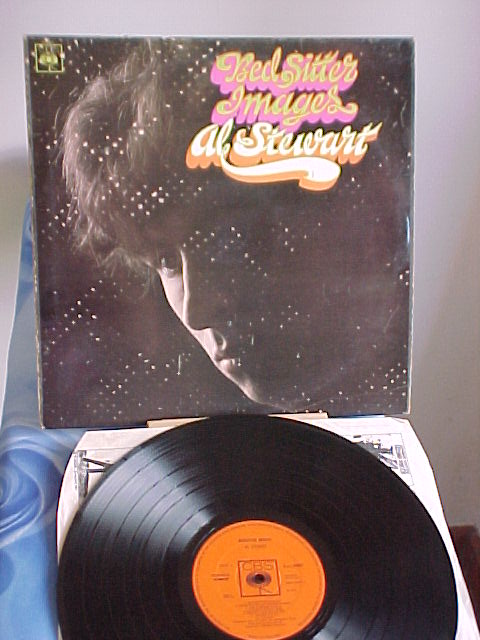
Many of the songs here will be unfamiliar to more casual fans — an intentional decision by the artists, so there would be no overlap between this and the previous live album. So there's no "Year Of The Cat," "Nostradamus," or "Roads To Moscow". However, for the more devoted fans, Stewart does dig deep enough into the well to pull out chestnuts like "Bedsitter Images" and "Carol."

Whether you are already a fan, or you just love great songs, rich storytelling, and some unexpectedly wicked guitar playing, Uncorked is a wonderful new album from an old friend.