The Rockologist: Dylan's Witmark Demos: Bootleg Series Vol. 9
Like so many of the archival albums issued as part of Bob Dylan's ongoing Bootleg Series, The Witmark Demos 1962 - 1964 isn't something that's going to appeal to everybody. Indeed, for those casual, or even semi-devoted Dylan fans with that dog-eared copy of Blood On The Tracks or Highway 61 gathering dust in the closet, this may warrant just a single listen (if even that) at best.
On the other hand, for those looking to delve ever deeper into the early development and legend of the man who in just a few short years went from being simply another in a long line of Woody Guthrie wannabes, to the iconic "voice of a generation" back in those formative early sixties years, this is truly essential stuff.
Once again, be forewarned though. This is a collection that truly separates the men from the boys when it comes to being any sort of serious, would-be Dylanologist.
Even if your own Bob collection draws from such disparate eras as Dylan's early folkie days, his shocking jump from folk to rock in the mid-sixties, the late seventies "born again" years, or even his more recent, latter-day artistic rejuvenation with albums like Love & Theft and Modern Times — this still may not be for you.
Although the pristine quality of these restored recordings is pretty remarkable when both their age and somewhat dusty vintage are taken into account, listening to them in a single sitting often requires nothing less than the patience of Job. But after all, one Dylan fans joy is another ones pain, right?
Repeated listens are likewise going to be unlikely — at least, unless you count yourself among the sort of fanatics who pour over each line of Dylan's songs as though you were deciphering Shakespeare. The good news here is that for those who fall into that latter category, this is definitely your kind of album. So, by all means, jump in with both feet. You'll be diving overboard before you know it.
As with all of the other collections in Dylan's Bootleg Series, the loving care taken in restoring these rare recordings and bringing them to market for mass consumption, appears to have been both painstaking and meticulous.
The 47 songs included here — demos a young and naked Dylan recorded for his earliest music publishers accompanied only by his acoustic guitar, harmonica and occasional piano — reveal an artist who, although certainly raw at the time, was clearly something special even then.
The stops and starts occasionally heard during these recordings — which are more like auditions never meant for public consumption anyway — clearly show that Dylan was a diamond in the rough not even halfway into his twenties. Dylan's rapid and remarkable development as a songwriter is clearly evident in the embryonic two year period covered here, as is his uncanny gift for turning a vocal phrase.
On early versions of songs we all know and love like "Masters Of War," "Mr. Tambourine Man" and "The Times They Are A Changin'," you can hear some of the earliest examples of why Bob Dylan — all popular notions aside — is such a great singer. Yes, you heard me right. Because nobody, but nobody matches lyric to vocal delivery and bites off phrases for the sake of emphasis quite like Dylan does.
I could devote an entire article to this subject alone, and perhaps one day I will. In the meantime, the recordings on The Witmark Demos display this uncanny talent in its earliest stages to often quite stunning effect. Say, what you will about Dylan's vocal range — and many have. But nobody outside of maybe Sinatra puts an exclamation point on a song lyric quite like him, and The Witmark Demos 1962 - 1964 offers convincing evidence it's a gift that he had very early on.
In addition to early demos of familiar Dylan songs ("A Hard Rain's A-Gonna'-Fall") and those which have become such a part of the American fabric that even non-fans will recognize them ("Blowin' In The Wind"), The Witmark Demos also includes a number of previously unreleased (officially speaking, anyway) songs that display his amazing depth as a songwriter, even at such an early stage. These range from the righteous indignation shown in early protest songs like "The Death Of Emmett Till" to the more down-to-earth emotional sentiments of "Ballad For A Friend."
One of the things that has made Dylan's Bootleg Series such an excellent archival sampling of his work, has been the way the albums have criss-crossed their way through the various periods of his legendary career. These have ranged from such truly iconic snapshots in time as Dylan's 1966 Royal Albert Hall Concert, to the soundtrack of Martin Scorsese's No Direction Home documentary to 2008's Tell Tale Signs — a collection which in documenting Dylan's artistic renaissance in the past decade or so, almost functions as an entirely new album.
The common thread with all these albums is that there really isn't one, at least not in a chronological sense. Unlike Neil Young's Archives series for example, the albums jump around from period-to-period with all of the same sort of wild abandon as Dylan's music and career itself does.
What unites the entries in The Bootleg Series however, is the reverence and loving care involved in each. The Witmark Demos 1962 - 1964 is no exception. The deluxe booklet accompanying The Witmark Demos 1962 - 1964 features rare photos from the period covered and an essay by music historian Colin Escott (the more expansive and likewise just released Original Mono Recordings boxed set features a more expansive piece by noted music critic Griel Marcus).
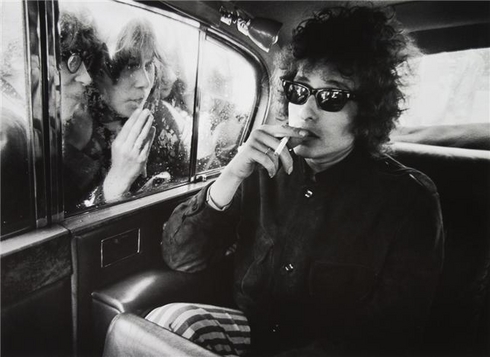
Again, for casual fans this collection is not something you'll likely be returning to the same way you would that worn and weathered old copy of Blonde On Blonde. The fact is, even the most devoted will find it something more appropriate for study and research then in humming a tune or even reliving a moment in time.
But for serious students of the bard, prepare yourselves to spend hours, if not days pouring over every word.
This article was first published as The Rockologist: Bob Dylan's Bootleg Series Vol. 9 - The Witmark Demos: 1962-1964 at Blogcritics Magazine.
Career Builder Search Engineering Basic Executive14 CareerBuilder Search Widget Searches jobs in CareerBuilder Virtual Career Builder - Jobs posting jobs to all submissions made by any User or third party whether in regards to the market.
Saturday, November 6, 2010
Sunday, October 31, 2010
Badfinger's Straight Up Album Remastered: Pure Power Pop Bliss
Music Review: Badfinger - Straight Up (2010 Apple Records Original Remasters)
Although some folks will argue that Badfinger's "No Matter What" was the first and perhaps the finest power-pop song (post-Beatles anyway), you'll still find little argument from those same fans that their third album Straight Up was/is their greatest achievement as a band.
As part of EMI/Capitol's ongoing remastering project of the original Apple Records catalog, Straight Up — along with the rest of Badfinger's first four albums — has just been released in a newly remastered edition.
For their few critics, the knock on Badfinger has always been their close ties to the Beatles, as well as the often striking similarities to the Fab's in their own sound. While it is true that you can hear distinct echoes of the Beatles in their best work, including Straight Up's two hit singles "Baby Blue" and "Day After Day," there are lots of other influences there as well.
You can hear plenty of the sixties California folk-pop of people like the Byrds and CSN&Y in Badfinger's spot-on harmonies for one thing (and hearing them again after all these years serves as a reminder of just how underrated Badfinger really was in that department). On the other hand, the lush elegance of songs like "Name Of The Game" and "It's Over" is cut straight from the early Elton John school of stately Brit-pop.
Still, there's no getting around the Beatles influence here. The unmistakable sound of George Harrison's "Hawaiian" guitar is all over "Day After Day" for one thing (Harrison's solo is actually double tracked with Badfinger guitarist Pete Ham here). And no, you are not imagining the resemblance to "Lady Madonna" on "Suitcase" (although you can also hear a little of Traffic's latter-day song "Light Up Or Leave Me Alone" here as well). "Sometimes" likewise is close enough to "She's A Woman," both in the killer guitar riff and the Macca-esque vocals, to warrant an arrest for suspicion of theft.
But ya' know what, who cares? There are certainly worse things than sounding a little like the greatest band of all time. After all, it certainly hasn't hurt bands like the Raspberries and Cheap Trick, right? The fact is, with Straight Up, Badfinger delivered one of the first power pop records of the post-Beatles era, and perhaps one of the best of all time.
Picking out all the Beatles references is just one of the things that makes Straight Up such a great album. Mostly though, Straight Up is sixty minutes (when you count the extras included here) of pure power pop bliss. Most of the original twelve songs clock in at three minutes or less. And while there are bright shimmering guitars and pop hooks aplenty here, equal attention is given over to lush sounding Brit-pop.
The longest track on the album, "Name Of The Game" is a perfect example of this. The five minute track is a gorgeous ballad, complimented by the sort of soaring vocal harmonies that wouldn't be a bit out of place on an album like Abbey Road. An alternate version of the song, originally intended for American single release, is occasionally bogged down by the addition of strings and horns that threaten to overwhelm the song (especially during the chorus). Even so, the added syrup mostly goes down pretty sweet.
Grammy winning engineer Geoff Emerick's remastering of the original tracks produced by George Harrison and Todd Rundgren (who was something like the Rick Rubin of his day) is also noteworthy. The separation is magnificent. On tracks like "Take It All" you can hear every crack of the snare drum with the same clarity as every strum of the guitar. If you liked Emerick's work on last years Beatles remasters, you'll love this.
The extras here are also notable, including alternate versions of "Baby Blue" (the U.S. single release, which sounds like it might have been mixed in mono) and "Name Of The Game" (with the aforementioned strings and horns). There are also three previously unreleased songs. The best of these, "No Good At All" is a ferocious sounding little rocker, powered by a killer guitar riff that sounds like a cross between T. Rex's "Bang A Gong" and Dave Edmunds "I Hear You Knocking." Although its a scant two minutes long, I can't imagine how this one ever got left on the cutting room floor.
Sadly, in between felonious mismanagement and the eventual suicides of original members Pete Ham and Tom Evans, Badfinger was never able to fully live up to their full potential as one of the best post-Beatles exports of great Brit-Pop.
What they leave behind is a string of great singles, and at least one criminally underrated album in Straight Up. Their lasting, if mostly unheralded influence on a generation of younger power-pop artists is unfortunately thought of as more of a footnote than anything else today.
If you haven't yet discovered them, or maybe you just always wondered who did all those great Beatles sounding songs in the early seventies like "Baby Blue" and "Day After Day," this newly remastered version of their finest album is a great place to start.
This article was first published as Music Review: Badfinger - Straight Up (2010 Apple Records Original Remasters) at Blogcritics Magazine.
Music Review: Badfinger - Straight Up (2010 Apple Records Original Remasters)
Although some folks will argue that Badfinger's "No Matter What" was the first and perhaps the finest power-pop song (post-Beatles anyway), you'll still find little argument from those same fans that their third album Straight Up was/is their greatest achievement as a band.
As part of EMI/Capitol's ongoing remastering project of the original Apple Records catalog, Straight Up — along with the rest of Badfinger's first four albums — has just been released in a newly remastered edition.
For their few critics, the knock on Badfinger has always been their close ties to the Beatles, as well as the often striking similarities to the Fab's in their own sound. While it is true that you can hear distinct echoes of the Beatles in their best work, including Straight Up's two hit singles "Baby Blue" and "Day After Day," there are lots of other influences there as well.
You can hear plenty of the sixties California folk-pop of people like the Byrds and CSN&Y in Badfinger's spot-on harmonies for one thing (and hearing them again after all these years serves as a reminder of just how underrated Badfinger really was in that department). On the other hand, the lush elegance of songs like "Name Of The Game" and "It's Over" is cut straight from the early Elton John school of stately Brit-pop.
Still, there's no getting around the Beatles influence here. The unmistakable sound of George Harrison's "Hawaiian" guitar is all over "Day After Day" for one thing (Harrison's solo is actually double tracked with Badfinger guitarist Pete Ham here). And no, you are not imagining the resemblance to "Lady Madonna" on "Suitcase" (although you can also hear a little of Traffic's latter-day song "Light Up Or Leave Me Alone" here as well). "Sometimes" likewise is close enough to "She's A Woman," both in the killer guitar riff and the Macca-esque vocals, to warrant an arrest for suspicion of theft.
But ya' know what, who cares? There are certainly worse things than sounding a little like the greatest band of all time. After all, it certainly hasn't hurt bands like the Raspberries and Cheap Trick, right? The fact is, with Straight Up, Badfinger delivered one of the first power pop records of the post-Beatles era, and perhaps one of the best of all time.
Picking out all the Beatles references is just one of the things that makes Straight Up such a great album. Mostly though, Straight Up is sixty minutes (when you count the extras included here) of pure power pop bliss. Most of the original twelve songs clock in at three minutes or less. And while there are bright shimmering guitars and pop hooks aplenty here, equal attention is given over to lush sounding Brit-pop.
The longest track on the album, "Name Of The Game" is a perfect example of this. The five minute track is a gorgeous ballad, complimented by the sort of soaring vocal harmonies that wouldn't be a bit out of place on an album like Abbey Road. An alternate version of the song, originally intended for American single release, is occasionally bogged down by the addition of strings and horns that threaten to overwhelm the song (especially during the chorus). Even so, the added syrup mostly goes down pretty sweet.
Grammy winning engineer Geoff Emerick's remastering of the original tracks produced by George Harrison and Todd Rundgren (who was something like the Rick Rubin of his day) is also noteworthy. The separation is magnificent. On tracks like "Take It All" you can hear every crack of the snare drum with the same clarity as every strum of the guitar. If you liked Emerick's work on last years Beatles remasters, you'll love this.
The extras here are also notable, including alternate versions of "Baby Blue" (the U.S. single release, which sounds like it might have been mixed in mono) and "Name Of The Game" (with the aforementioned strings and horns). There are also three previously unreleased songs. The best of these, "No Good At All" is a ferocious sounding little rocker, powered by a killer guitar riff that sounds like a cross between T. Rex's "Bang A Gong" and Dave Edmunds "I Hear You Knocking." Although its a scant two minutes long, I can't imagine how this one ever got left on the cutting room floor.
Sadly, in between felonious mismanagement and the eventual suicides of original members Pete Ham and Tom Evans, Badfinger was never able to fully live up to their full potential as one of the best post-Beatles exports of great Brit-Pop.
What they leave behind is a string of great singles, and at least one criminally underrated album in Straight Up. Their lasting, if mostly unheralded influence on a generation of younger power-pop artists is unfortunately thought of as more of a footnote than anything else today.
If you haven't yet discovered them, or maybe you just always wondered who did all those great Beatles sounding songs in the early seventies like "Baby Blue" and "Day After Day," this newly remastered version of their finest album is a great place to start.
This article was first published as Music Review: Badfinger - Straight Up (2010 Apple Records Original Remasters) at Blogcritics Magazine.
Sunday, October 24, 2010
Its Been A Long Time Comin'
Hell has officially frozen over. No, I don't mean the Eagles have made another album.
After two long years of endless applications, job interviews, and let's not forget those employment scams I've come to love so much, I have finally received an actual job offer. The formal offer is currently set to be made on Tuesday, and I could actually start work at my new job on Wednesday. Imagine that. A frickin' job. Guess I'll have to put off that order for a custom cardboard box.
After two years of being unable to sleep most nights -- staying up all night and sleeping through much of the day -- resuming the sort of schedule most people would call normal is going to be a major adjustment. It will also probably be hard to break the habit of checking the daily job boards (not that nearly everything there that isn't a scam, is still not worth a crap in most cases anyway). In some ways, I'll miss that. I'm also going to need to pick up the pace a bit on my Neil Young book, since I very soon may not have the luxury of endless hours of spare time to write that I do now.
But I'll tell you what I won't miss. Number one would be the groundhog day sort of life I've lead the past two years. Sleeping late, making sure I get to Taco Del Mar in time for happy hour everyday (two tacos for two bucks!), and staying up till the sun comes up on some nights, and sleeping until its damn near gone down again. That type of stuff, like the vampire hours, I won't miss a bit. I also won't miss having to make decisions like do I buy food or put gas in the car today, or feeling just crazy worthless and depressed all the time (which also plays into the whole vampire thing).
And I definitely won't miss job interviews -- where the questioning has taken on a very invasive level of intrusion into one's private life and occasionally even a gestapo type atmosphere as though you were on trial for some unspecified crime (like showing up I suppose). Or even worse, when the interviewer takes one look at you, and already has their minds made up (I've even had one interviewer feign sickness so she didn't have to talk to me -- seriously!). I won't miss going to job fairs where nobody's hiring, but everyone has something to sell. I also won't miss dodging my landlord till the unemployment check arrives (and I suspect he won't miss that either).
Nope. Won't miss those interviews one bit.
The self-esteem is probably gonna' take awhile to come back -- two years of unemployment and poverty can be a real ass-kicker. But I'll tell ya' what? I haven't felt this good in, well, two years now. And as my boy Bruce would say, its been a long time comin'.
Can't wait till' I can also quote Elvis Costello by happily humming "Welcome To The Working Week."
Hell has officially frozen over. No, I don't mean the Eagles have made another album.
After two long years of endless applications, job interviews, and let's not forget those employment scams I've come to love so much, I have finally received an actual job offer. The formal offer is currently set to be made on Tuesday, and I could actually start work at my new job on Wednesday. Imagine that. A frickin' job. Guess I'll have to put off that order for a custom cardboard box.
After two years of being unable to sleep most nights -- staying up all night and sleeping through much of the day -- resuming the sort of schedule most people would call normal is going to be a major adjustment. It will also probably be hard to break the habit of checking the daily job boards (not that nearly everything there that isn't a scam, is still not worth a crap in most cases anyway). In some ways, I'll miss that. I'm also going to need to pick up the pace a bit on my Neil Young book, since I very soon may not have the luxury of endless hours of spare time to write that I do now.
But I'll tell you what I won't miss. Number one would be the groundhog day sort of life I've lead the past two years. Sleeping late, making sure I get to Taco Del Mar in time for happy hour everyday (two tacos for two bucks!), and staying up till the sun comes up on some nights, and sleeping until its damn near gone down again. That type of stuff, like the vampire hours, I won't miss a bit. I also won't miss having to make decisions like do I buy food or put gas in the car today, or feeling just crazy worthless and depressed all the time (which also plays into the whole vampire thing).
And I definitely won't miss job interviews -- where the questioning has taken on a very invasive level of intrusion into one's private life and occasionally even a gestapo type atmosphere as though you were on trial for some unspecified crime (like showing up I suppose). Or even worse, when the interviewer takes one look at you, and already has their minds made up (I've even had one interviewer feign sickness so she didn't have to talk to me -- seriously!). I won't miss going to job fairs where nobody's hiring, but everyone has something to sell. I also won't miss dodging my landlord till the unemployment check arrives (and I suspect he won't miss that either).
Nope. Won't miss those interviews one bit.
The self-esteem is probably gonna' take awhile to come back -- two years of unemployment and poverty can be a real ass-kicker. But I'll tell ya' what? I haven't felt this good in, well, two years now. And as my boy Bruce would say, its been a long time comin'.
Can't wait till' I can also quote Elvis Costello by happily humming "Welcome To The Working Week."
Saturday, October 23, 2010
I Got Id: Neil Young and Pearl Jam
As many of you already know, I'm writing a book about Neil Young.
I'm also dreadfully behind schedule on the April 2011 delivery date promised by contract to my publisher on it.
The good news is I'm closing on in it being half-done, with about five months to go. The bad news is, yep! you guessed it, I'm not quite half-done with only those damn five months till' deadline. As hard as breaking up is to do, catching up is even harder. Trust me on that.
That aside -- and trust me, it'll get done -- one of the great joys of writing this book has been going back through Neil's catalog, and especially rediscovering those albums I'd mostly forgotten.
Tonight was just such a case.
Right now, I'm working on a chapter about Neil's most underrated albums. Albums like Trans and Sleeps With Angels will certainly rank right up there of course. But for me, the whole 1995 period with Pearl Jam and Mirror Ball is a particular standout. Honestly, why in God's name doesn't anybody remember this? Because it was some amazingly great stuff.
Not only was this a case of the punks meeting the Godfather -- it also stands out as the point where Neil Young -- albeit briefly -- may have met his most perfect backup band ever. Don't get me wrong here, because I love Crazy Horse as much as anyone.
But where Crazy Horse is a band whose greatest function has always been to lay down a solid, if slightly sloppy and funky groove for Neil to soar over -- Pearl Jam are as tight as a bag of nails on Mirror Ball, and their own accompanying E.P. Merkin Ball.
On songs like "Peace And Love" and "Throw Your Hatred Down," Neil's lead guitar snarls and screeches over the deep, bass heavy rhythmic din created by PJ's then monster drummer Jack Irons and bassist Jeff Ament. Guitarists Stone Gossard and Mike McCready likewise lay down a positively audacious and ferocious groove, inspiring Neil Young to new heights of hallucinogenic flight.
Seriously, I'd forgotten just how great this record is.
Although this is a rare case of Neil's lyrics taking a backseat -- as if they could cut through the din made by Pearl Jam here anyway -- there is also an undeniably nostalgic look back towards the sixties hippie era here. In songs like "Peace And Love," "Downtown" and "Throw Your Hatred Down," references to musical icons of the sixties period like John Lennon and Jimi Hendrix (and their peacenik political sentiments) are abundant.
In the song, "Big Green Country," Neil even sneaks in some of his trademark Indian lyrics ("With folded arms the chief stood watching/painted braves slipped down the hill").
Amazingly, this mostly goes unnoticed -- much as this album has in the greater scheme of Neil Young's overall catalog. There's not a chance in hell you will ever hear "Big Green Country" Or "Peace And Love" played on classic rock radio, and for my money at least, that sucks. This is why I place Mirror Ball clearly in the category of Neil Young's most underrated albums ever.
Who knew that Seattle grunge-sters could have been Neil Young’s best backing band ever? Well okay, maybe anyone who has ever heard the way that PJ backed Neil Young doing “Rockin’ In The Free World” on Saturday Night Live.
That aside, Neil and Pearl Jam pretty much tear the whole damn house down on Mirror Ball and then some. It's easily Neil Young's most rocking album of the nineties, and a decent argument could even be made that the album stands out as some of the most cacophonously beautiful noise of his entire career.
On a final note, Pearl Jam's companion E.P. Merkin Ball also features one of Neil's best guitar solos ever on the song "I Got Id." Eddie V's got the vocal covered here, but there is no mistaking the menacing snarl of Neil and Old Black.
When Neil and Pearl Jam played a "secret" club gig in Seattle back then, I thought I had an "in" with my then drinking buddy Kim Thayil from Soundgarden. No such luck.
I admit I've never forgiven him for that. But Kim, if you're listening, if you can get me a line to Eddie to write me an intro for my book on Neil, I'm all ears. And I'll even pick up the bar tab. Promise.
This article was first published as The Rockologist:: Neil Young And Pearl Jam Have "Got Id" at Blogcritics Magazine.
As many of you already know, I'm writing a book about Neil Young.
I'm also dreadfully behind schedule on the April 2011 delivery date promised by contract to my publisher on it.
The good news is I'm closing on in it being half-done, with about five months to go. The bad news is, yep! you guessed it, I'm not quite half-done with only those damn five months till' deadline. As hard as breaking up is to do, catching up is even harder. Trust me on that.
That aside -- and trust me, it'll get done -- one of the great joys of writing this book has been going back through Neil's catalog, and especially rediscovering those albums I'd mostly forgotten.
Tonight was just such a case.
Right now, I'm working on a chapter about Neil's most underrated albums. Albums like Trans and Sleeps With Angels will certainly rank right up there of course. But for me, the whole 1995 period with Pearl Jam and Mirror Ball is a particular standout. Honestly, why in God's name doesn't anybody remember this? Because it was some amazingly great stuff.
Not only was this a case of the punks meeting the Godfather -- it also stands out as the point where Neil Young -- albeit briefly -- may have met his most perfect backup band ever. Don't get me wrong here, because I love Crazy Horse as much as anyone.
But where Crazy Horse is a band whose greatest function has always been to lay down a solid, if slightly sloppy and funky groove for Neil to soar over -- Pearl Jam are as tight as a bag of nails on Mirror Ball, and their own accompanying E.P. Merkin Ball.
On songs like "Peace And Love" and "Throw Your Hatred Down," Neil's lead guitar snarls and screeches over the deep, bass heavy rhythmic din created by PJ's then monster drummer Jack Irons and bassist Jeff Ament. Guitarists Stone Gossard and Mike McCready likewise lay down a positively audacious and ferocious groove, inspiring Neil Young to new heights of hallucinogenic flight.
Seriously, I'd forgotten just how great this record is.
Although this is a rare case of Neil's lyrics taking a backseat -- as if they could cut through the din made by Pearl Jam here anyway -- there is also an undeniably nostalgic look back towards the sixties hippie era here. In songs like "Peace And Love," "Downtown" and "Throw Your Hatred Down," references to musical icons of the sixties period like John Lennon and Jimi Hendrix (and their peacenik political sentiments) are abundant.
In the song, "Big Green Country," Neil even sneaks in some of his trademark Indian lyrics ("With folded arms the chief stood watching/painted braves slipped down the hill").
Amazingly, this mostly goes unnoticed -- much as this album has in the greater scheme of Neil Young's overall catalog. There's not a chance in hell you will ever hear "Big Green Country" Or "Peace And Love" played on classic rock radio, and for my money at least, that sucks. This is why I place Mirror Ball clearly in the category of Neil Young's most underrated albums ever.
Who knew that Seattle grunge-sters could have been Neil Young’s best backing band ever? Well okay, maybe anyone who has ever heard the way that PJ backed Neil Young doing “Rockin’ In The Free World” on Saturday Night Live.
That aside, Neil and Pearl Jam pretty much tear the whole damn house down on Mirror Ball and then some. It's easily Neil Young's most rocking album of the nineties, and a decent argument could even be made that the album stands out as some of the most cacophonously beautiful noise of his entire career.
On a final note, Pearl Jam's companion E.P. Merkin Ball also features one of Neil's best guitar solos ever on the song "I Got Id." Eddie V's got the vocal covered here, but there is no mistaking the menacing snarl of Neil and Old Black.
When Neil and Pearl Jam played a "secret" club gig in Seattle back then, I thought I had an "in" with my then drinking buddy Kim Thayil from Soundgarden. No such luck.
I admit I've never forgiven him for that. But Kim, if you're listening, if you can get me a line to Eddie to write me an intro for my book on Neil, I'm all ears. And I'll even pick up the bar tab. Promise.
This article was first published as The Rockologist:: Neil Young And Pearl Jam Have "Got Id" at Blogcritics Magazine.
Saturday, October 16, 2010
Best Music Writing 2010: Bring On The Music Snobs
Book Review: Best Music Writing 2010 Edited by Ann Powers and Daphne Carr
I have to admit that the annual installment of Da Capo Books' ongoing Best Music Writing series is something I look very forward to reading each year.
As a music writer myself, and on a purely informative and instructive level, it's a great way to keep tabs on what the competition out there in music critic land is up to. But more than that, the writing is indeed mostly top-notch, making Best Music Writing a series that more often than not lives up to its lofty name.
The 2010 edition, which arrives in book stores on November 9, is no exception. The biggest difference between this year's model and previous volumes of the series however, is that the entries this year represent the broadest, most diverse collection of music criticism offered up to date. There really is something here for just about everybody — whether your tastes run towards indie-rock, country and hip-hop or to more obscure corners of the music spectrum like regional Mexican music, the Louisiana gumbo of BeauSoleil, or even classical and opera.
This year's entries also reflect the year in music news, with multiple entries on Michael Jackson and the Rihanna/Chris Brown dustup, and stories on such 2010 phenoms as Lady GaGa and this year's fastest rising hip-hop star, Canadian rapper Drake.
Speaking of hip-hop, Best Music Writing 2010 includes more music articles dedicated to that genre than ever before. Kanye West's infamous interruption of Taylor Swift at last year's MTV Video Music Awards, is examined in pro-wrestling vernacular (was Kanye's tirade a "work" or a "shoot"?) in a very entertaining piece by Idolator's Maura Johnston. In another great read here, Hip Hop Connection's Phillip Mlynar looks at how fallen hip-hop kingpin 50 Cent might reclaim his once undisputed throne.
There are also articles by such respected music scribes as former Best Music Writing editor and "dean of rock critics" Robert Christgau (a profile of country superstar Brad Paisley) and the Village Voice's Greg Tate (who contributes one of the pieces on Michael Jackson).
Elsewhere, you'll find great writing about everyone from Adam Lambert to Merle Haggard, and every subject from how to read the contents of a royalty statement from Warner Bros. to the relationship between what we listen to and what we do in the bedroom. Like I said, a little something for everybody.
But for my money, the strongest writing found in Best Music Writing 2010 comes down to three entries.
For anyone who either has aspirations of becoming a music critic themselves, or has spent decades of starving while toiling away at it mostly for free as I have, Christopher R. Weingarten's piece on "Twitter And The Death of Rock Criticism" is an absolute must-read.
What is most amazing about this entry is that it originally wasn't even a written article at all, but rather an address given to the 140 Characters Conference in New York City. Either way, Weingarten's insights into the devolution of the art of music criticism in the digital age are uncannily incisive and for the most part spot-on.
Hua Hsu's "The End Of White America?" is another great read, which examines the changing racial landscape of America from a musical and cultural perspective. As is the case with Weingarten's piece, Hsu's observations are likewise right on the money and make for a very enlightening read.
And who better to provide a detailed analysis on "The Decade In Indie" than a Pitchfork writer like Nitsuh Abebe?
What I found most refreshing about Abebe's breakdown of the so-called indie genre, was the way he examines the many different musical factions gathered under the indie umbrella, and correctly calls out the snobs on all sides. Coming from a publication that can be as musically elitist as Pitchfork, it's a rare show of honesty that reads like a breath of fresh air. Another must-read, especially for all you indie-snobs.
With Best Music Writing 2010, editor Ann Powers (Los Angeles Times) and executive editor Daphne Carr have once again compiled a great collection of music journalism that really does represent the cream of the crop. Here's hoping they'll take a closer look at my own entries for next year's book.
This article was first published as Book Review: Best Music Writing 2010 Edited by Ann Powers and Daphne Carr at Blogcritics Magazine.
Book Review: Best Music Writing 2010 Edited by Ann Powers and Daphne Carr
I have to admit that the annual installment of Da Capo Books' ongoing Best Music Writing series is something I look very forward to reading each year.
As a music writer myself, and on a purely informative and instructive level, it's a great way to keep tabs on what the competition out there in music critic land is up to. But more than that, the writing is indeed mostly top-notch, making Best Music Writing a series that more often than not lives up to its lofty name.
The 2010 edition, which arrives in book stores on November 9, is no exception. The biggest difference between this year's model and previous volumes of the series however, is that the entries this year represent the broadest, most diverse collection of music criticism offered up to date. There really is something here for just about everybody — whether your tastes run towards indie-rock, country and hip-hop or to more obscure corners of the music spectrum like regional Mexican music, the Louisiana gumbo of BeauSoleil, or even classical and opera.
This year's entries also reflect the year in music news, with multiple entries on Michael Jackson and the Rihanna/Chris Brown dustup, and stories on such 2010 phenoms as Lady GaGa and this year's fastest rising hip-hop star, Canadian rapper Drake.
Speaking of hip-hop, Best Music Writing 2010 includes more music articles dedicated to that genre than ever before. Kanye West's infamous interruption of Taylor Swift at last year's MTV Video Music Awards, is examined in pro-wrestling vernacular (was Kanye's tirade a "work" or a "shoot"?) in a very entertaining piece by Idolator's Maura Johnston. In another great read here, Hip Hop Connection's Phillip Mlynar looks at how fallen hip-hop kingpin 50 Cent might reclaim his once undisputed throne.
There are also articles by such respected music scribes as former Best Music Writing editor and "dean of rock critics" Robert Christgau (a profile of country superstar Brad Paisley) and the Village Voice's Greg Tate (who contributes one of the pieces on Michael Jackson).
Elsewhere, you'll find great writing about everyone from Adam Lambert to Merle Haggard, and every subject from how to read the contents of a royalty statement from Warner Bros. to the relationship between what we listen to and what we do in the bedroom. Like I said, a little something for everybody.
But for my money, the strongest writing found in Best Music Writing 2010 comes down to three entries.
For anyone who either has aspirations of becoming a music critic themselves, or has spent decades of starving while toiling away at it mostly for free as I have, Christopher R. Weingarten's piece on "Twitter And The Death of Rock Criticism" is an absolute must-read.
What is most amazing about this entry is that it originally wasn't even a written article at all, but rather an address given to the 140 Characters Conference in New York City. Either way, Weingarten's insights into the devolution of the art of music criticism in the digital age are uncannily incisive and for the most part spot-on.
Hua Hsu's "The End Of White America?" is another great read, which examines the changing racial landscape of America from a musical and cultural perspective. As is the case with Weingarten's piece, Hsu's observations are likewise right on the money and make for a very enlightening read.
And who better to provide a detailed analysis on "The Decade In Indie" than a Pitchfork writer like Nitsuh Abebe?
What I found most refreshing about Abebe's breakdown of the so-called indie genre, was the way he examines the many different musical factions gathered under the indie umbrella, and correctly calls out the snobs on all sides. Coming from a publication that can be as musically elitist as Pitchfork, it's a rare show of honesty that reads like a breath of fresh air. Another must-read, especially for all you indie-snobs.
With Best Music Writing 2010, editor Ann Powers (Los Angeles Times) and executive editor Daphne Carr have once again compiled a great collection of music journalism that really does represent the cream of the crop. Here's hoping they'll take a closer look at my own entries for next year's book.
This article was first published as Book Review: Best Music Writing 2010 Edited by Ann Powers and Daphne Carr at Blogcritics Magazine.
Friday, October 8, 2010
Ladies And Gentlemen The Rolling Stones: What Took Them So Long?
Music DVD Review: Ladies And Gentlemen The Rolling Stones
When you've been together as long as the Rolling Stones, it's inevitable that there are going to be a ton of live concert films and albums released along the way. In the Stones case, there's even more out there than most.
These range from genuine classics like Get Your Ya Yas Out and great concert films like the Maysles Brothers' Gimme Shelter and Martin Scorsese's Shine A Light, to the out and out awful — anybody remember Love You Live?
Lying somewhere in between these two extremes, are a string of mostly forgettable concert films like the 1981 Stones tour document Lets Spend The Night Together.

But with all due respect to Martin Scorsese and the Maysles Brothers, the long out-of-print 1974 film Ladies And Gentlemen The Rolling Stones may be the best pure live Rolling Stones concert document of them all. Now, thanks to the fine folks at Eagle Rock, this long-lost document of the Stones barnstorming 1972 American tour has not only been found, but fully restored and digitally remastered to its original glory.
Ladies And Gentleman The Rolling Stones captures the Stones at the height of their popularity and at the peak of their powers as a live band during their Exile On Main Street tour of America in 1972. Recorded over the course of four shows in Texas during that tour, the film was briefly seen in a limited theatrical release two years later, but has long since disappeared off the radar. Why is anyone's guess, especially after seeing it now, some three decades later.
Watching this film today on DVD, its easy to see how the Stones earned their reputation as the greatest rock and roll band in the world. For the entire 90 minute running time of this DVD, the high energy level established by the powerful opening one-two punch of "Brown Sugar" and "Bitch" never lets up for a second. The Stones are crisp and tight, and despite being the undisputed biggest band on Earth at the time, they still play like they have everything to prove throughout this entire amazing show.
It's also easy to see so why many hardcore Stones fans still view the so-called "Mick Taylor" years as the creative high water mark of the Stones entire career here.
Taylor's lead guitar work throughout this performance is nothing short of stunning. There are numerous standout solos on songs like "Love In Vain" and "You Can't Always Get What You Want." But it is mostly on the rockers like "All Down The Line," "Tumblin' Dice" and "Midnight Rambler" that Taylor's leads meld seamlessly into Keith Richards' powerhouse riffs to a form a perfectly fluid whole.
Speaking of "Midnight Rambler," Mick Jagger's extended theatrical mid-song belt whipping and primal screaming turn this into another of the standout performances on this DVD. As a frontman, Jagger is actually a force of nature throughout here.
It's particularly interesting to see the way he traded in the darker, more satanic "Jack Flash" persona seen on the 1969 tour document Gimme Shelter, for the heavily sequined and mascaraed — and no doubt Bowie influenced — early-seventies preening glitter rock dandy he is here.
But what really makes Ladies And Gentlemen The Rolling Stones arguably the best pure document of a Stones concert though, is the way it concentrates strictly on the concert and nothing else. As great a film as Gimme Shelter is for example, there's no denying the fact that the actual concerts the Stones played in 1969 take a back seat to the events leading up to the disaster at Altamont. That's the real story in that film.
Likewise, on Martin Scorsese's more recent Shine A Light — though there are some great performances as well — the real story there is how the Stones can still be a great rock and roll band on any given night, even well into their twilight years.
What you get with Ladies And Gentlemen The Rolling Stones on the other hand, is a great concert document of the Rolling Stones during that early seventies period while their legend was still largely being written, and when the Stones could lay legitimate claim to being the mostly undisputed greatest rock and roll band in the world.
It should also be mentioned here, that for all the time this great, long lost gem has spent time gathering dust in the vaults somewhere, Eagle Rock has done an excellent job of restoring and remastering it.
Given its age — and particularly when its compared to other concert films from the same time period — the picture quality is superb and the sound is likewise remarkably crisp and clear.
There's also some great extras here — including a pair of interviews with Mick Jagger, one from 1972 and another from just this past summer. The best of the extras though, comes with three songs from the original 1972 rehearsals for the Exile tour, including "Tumblin' Dice," "Shake Your Hips" and a blues jam. Although he is never seen in the picture, Ian Stuart appears to be playing keyboards (a spot taken by Nicky Hopkins for the actual tour).
With Ladies And Gentlemen The Rolling Stones, Eagle Rock has done a wonderful job of restoring a pivotal moment in rock and roll history. The only question is what took them so long?
This article was first published as Music DVD Review: Ladies And Gentlemen The Rolling Stones at Blogcritics Magazine.
Music DVD Review: Ladies And Gentlemen The Rolling Stones
When you've been together as long as the Rolling Stones, it's inevitable that there are going to be a ton of live concert films and albums released along the way. In the Stones case, there's even more out there than most.
These range from genuine classics like Get Your Ya Yas Out and great concert films like the Maysles Brothers' Gimme Shelter and Martin Scorsese's Shine A Light, to the out and out awful — anybody remember Love You Live?
Lying somewhere in between these two extremes, are a string of mostly forgettable concert films like the 1981 Stones tour document Lets Spend The Night Together.
But with all due respect to Martin Scorsese and the Maysles Brothers, the long out-of-print 1974 film Ladies And Gentlemen The Rolling Stones may be the best pure live Rolling Stones concert document of them all. Now, thanks to the fine folks at Eagle Rock, this long-lost document of the Stones barnstorming 1972 American tour has not only been found, but fully restored and digitally remastered to its original glory.
Ladies And Gentleman The Rolling Stones captures the Stones at the height of their popularity and at the peak of their powers as a live band during their Exile On Main Street tour of America in 1972. Recorded over the course of four shows in Texas during that tour, the film was briefly seen in a limited theatrical release two years later, but has long since disappeared off the radar. Why is anyone's guess, especially after seeing it now, some three decades later.
Watching this film today on DVD, its easy to see how the Stones earned their reputation as the greatest rock and roll band in the world. For the entire 90 minute running time of this DVD, the high energy level established by the powerful opening one-two punch of "Brown Sugar" and "Bitch" never lets up for a second. The Stones are crisp and tight, and despite being the undisputed biggest band on Earth at the time, they still play like they have everything to prove throughout this entire amazing show.
It's also easy to see so why many hardcore Stones fans still view the so-called "Mick Taylor" years as the creative high water mark of the Stones entire career here.
Taylor's lead guitar work throughout this performance is nothing short of stunning. There are numerous standout solos on songs like "Love In Vain" and "You Can't Always Get What You Want." But it is mostly on the rockers like "All Down The Line," "Tumblin' Dice" and "Midnight Rambler" that Taylor's leads meld seamlessly into Keith Richards' powerhouse riffs to a form a perfectly fluid whole.
Speaking of "Midnight Rambler," Mick Jagger's extended theatrical mid-song belt whipping and primal screaming turn this into another of the standout performances on this DVD. As a frontman, Jagger is actually a force of nature throughout here.
It's particularly interesting to see the way he traded in the darker, more satanic "Jack Flash" persona seen on the 1969 tour document Gimme Shelter, for the heavily sequined and mascaraed — and no doubt Bowie influenced — early-seventies preening glitter rock dandy he is here.
But what really makes Ladies And Gentlemen The Rolling Stones arguably the best pure document of a Stones concert though, is the way it concentrates strictly on the concert and nothing else. As great a film as Gimme Shelter is for example, there's no denying the fact that the actual concerts the Stones played in 1969 take a back seat to the events leading up to the disaster at Altamont. That's the real story in that film.
Likewise, on Martin Scorsese's more recent Shine A Light — though there are some great performances as well — the real story there is how the Stones can still be a great rock and roll band on any given night, even well into their twilight years.
What you get with Ladies And Gentlemen The Rolling Stones on the other hand, is a great concert document of the Rolling Stones during that early seventies period while their legend was still largely being written, and when the Stones could lay legitimate claim to being the mostly undisputed greatest rock and roll band in the world.
It should also be mentioned here, that for all the time this great, long lost gem has spent time gathering dust in the vaults somewhere, Eagle Rock has done an excellent job of restoring and remastering it.
Given its age — and particularly when its compared to other concert films from the same time period — the picture quality is superb and the sound is likewise remarkably crisp and clear.
There's also some great extras here — including a pair of interviews with Mick Jagger, one from 1972 and another from just this past summer. The best of the extras though, comes with three songs from the original 1972 rehearsals for the Exile tour, including "Tumblin' Dice," "Shake Your Hips" and a blues jam. Although he is never seen in the picture, Ian Stuart appears to be playing keyboards (a spot taken by Nicky Hopkins for the actual tour).
With Ladies And Gentlemen The Rolling Stones, Eagle Rock has done a wonderful job of restoring a pivotal moment in rock and roll history. The only question is what took them so long?
This article was first published as Music DVD Review: Ladies And Gentlemen The Rolling Stones at Blogcritics Magazine.
Subscribe to:
Posts (Atom)