Sunday, January 1, 2012

In Defense Of Coldplay

After watching them blow up the Space Needle here in Seattle, I spent a quiet New Years Eve at home.


Channel surfing through the various network offerings ringing in the New Year — which included a surprisingly hot Kathy Griffin stripping down to her bra and panties in Times Square, with an aghast Anderson Cooper looking on over on CNN; and the Ryan Seacrest/Dick Clark crapfest on ABC — I finally settled on the Coldplay Austin City Limits concert on PBS.

Now, before you go shrieking in horror at the mention of Coldplay, let's get something straight.

I like Coldplay.

The fact that this brings me considerable grief — both from my friends, and among some of my cohorts at Blogcritics — is really of little circumstance. The fact is, I think Coldplay are a very decent band, that gets nowhere the respect they deserve. That said, I also completely understand the criticism.

"Chick band?" Check.

Chris Martin's whiny falsetto alone virtually guarantees this charge. In fact, one of the funniest things I have ever heard in my life, was listening to a three hour Tom Leykis radio show driving home from work one night, that was devoted to the sole subject of why any real man would never be caught dead at a Coldplay concert.

Even though I had no choice but to agree with Leykis, I also couldn't help but admit that I'm one of those ball-less guys who actually likes them.

Of course, on the other hand, I can think of few other bands out there plying their trade today, that draw as many beautiful single women to their concerts since the eighties heyday of Journey.

Food for thought, gentlemen?

But let's get to the crux of the matter, which of course is the music. Tonight's New Years Eve Austin City Limits concert on PBS was a perfect example of why Coldplay actually is a pretty great band — especially in a live setting.

First off, they've recorded some really great songs.

And in A Rush Of Blood To The Head, they also have one certifiably great album. The gorgeous ballad "The Scientist," and especially "Clocks," — which features the single catchiest piano-based riff of the past ten years — solidifies Rush Of Blood's position as one of the best rock albums of the past ten years on it's own. And yes, rock it does.


Honestly, there isn't a clunker in the bunch. Track for track, it's a great album. Viva La Vida was also a damn decent record, especially that album's standout track, "Lost."

Of course, Coldplay have also made some less than stellar records.

But even their lesser albums like X&Y and the current Xylo Myloto, contain some great songs. On the former, Coldplay's stab at the grandiosity of Queen's "Bohemian Rhapsody" on the song "Fix You" particularly stands out, while on the current, largely underwhelming Xylo Myloto, I still can't help but be sucked in by the gorgeousness of "Paradise."

But then there is Coldplay live, and this is where the band truly stands out. One of the things I most enjoyed about the three Coldplay concerts I've seen — and particularly the last one I saw on the tail end of the Viva La Vida tour at the Gorge in Eastern Washington — is the way they engage the audience.

Outside of Bruce Springsteen and the E Street Band, I would be hard pressed to name any single rock and roll band today who captures a similarly communal feeling between audience and performer in concert.

The "whoa-ohs" exchanged between the guys onstage, and the folks in the crowd — and did I mention they draw some of the hottest looking girls you'll find at a rock show anywhere these days? — just really leave you with this warm and fuzzy effect, once you leave the arena. Girls aside, and for you rocker dudes out there, it should also be noted that Will Champion just pounds the living crap out of his drums in concert.

But the other thing that needs to be mentioned here, is the fact that these seem to be genuinely nice guys. Current crop of "The" bands aside (Cage "The" Elephant, Foster "The" People, etc.), the idea of earnest rock bands, particularly at a time when average working people are really hurting, is a really welcome one right now.

From what I can tell, Coldplay is a band that wears their hearts mostly on their collective sleeve. Sure, they would love nothing more than to be U2 — especially since Brian Eno started producing their records.

Xylo Myloto is not an album that has me rushing to buy tickets to Coldplay's concert in Seattle this April (much as I like the one song, "Paradise") either.

But watching them at home alone tonight on PBS beat the crap out of Gaga, Bieber, and the rest of the "New Years Rockin' Eve" crap over on that other station.

Given the alternatives, Coldplay deserve a break.

This article was first published at Blogcritics Magazine.

Friday, December 23, 2011

Merry Christmas From The World Wide Glen

Music 2011: The Rockologist's Top Ten Album Picks


Ladies and gentlemen, we don't have a winner.

As the year in music 2011 draws to a close, the biggest news is that — unlike 2010's near universal anointing of Arcade Fire's The Suburbs — there was no such unanimous consensus amongst music critics, regarding a clear-cut choice for the year's best album.

No matter.

Adele's 21 was of course, still the biggest story of 2011. The come-from-nowhere chart dominance of "Rolling In The Deep" alone all but guaranteed that.

But Adele was only one of several new talents — including Florence Welch of Florence And The Machine — to emerge in a big enough way this year, to lead some veteran observers to label 2011 as being "the year of the big voice." Somewhere out there, a guy living alone in his Mom's basement was heard saying "Oh, Snap!" to that.

The untimely death of Amy Winehouse no doubt played at least some role in this. In 2011, both critics and fans searched far and wide, in the hopes of finding that fresh, new voice ready to fill the surprisingly huge void that Winehouse left behind. Meanwhile, a mostly older generation of classic rock fans mourned the year's other biggest loss — that of saxophone player Clarence Clemons, otherwise known as the "Big Man" of Bruce Springsteen's E Street Band.

But even with Adele's huge commercial and critical breakthrough this year, this was still not enough to solidify 21 as the odds-on choice for Album of the Year. Instead, when one scans through the various year-end lists already making the rounds out there, several names seem to pop up repeatedly. Some of the most often mentioned, also made my own top ten this year (Kate Bush, Tom Waits), while others (most notably PJ Harvey's Let England Shake) did not.

The best news about 2011 though, was that once you managed to get past the seemingly endless string of mindless pop-candy out there from Lady Gaga, Katy Perry and the like, there was still a surprisingly ample amount of great music. Other than the fact that Springsteen is touring with the E Street Band, and Bon Jovi is thankfully alive and well (ditto for Bon Iver), we still don't know a lot about what 2012 will bring yet.

In the meantime, these were the ten albums that spent the most time in heavy rotation on my CD player. Sorry, the Rockologist doesn't do iPods.

10. The Black Keys - El Camino

A very late entry, from a nonetheless very worthy contender. Guitar. Drums. Danger Mouse. Big Ass Sound. Any Questions?

9. The Beach Boys - SMiLE

After much deliberation and gnashing of teeth, I've reluctantly decided to include this here, even if the music — originally recorded for an unreleased 1967 Beach Boys album that has long since gone on to mythical status — doesn't technically qualify as being exactly "new."

The most common gripe about the 2011 SMiLE box, is that much of the music has been around for years (at least in bits and pieces), and available on various Beach Boys reissues and bootlegs. But up until now, it has never been pieced together with this much loving care on an official release.

Sure, the endless outtakes of "Good Vibrations" are a bit much to take (unless you're a diehard completist, anyway). But for sheer warmth, this beats the pants off of Brian Wilson's 2004 studio recreation of SMiLE. It will be interesting to see if the Beach Boys try any of this stuff out live on their reunion tour with Brian Wilson next year.

8. Adele - 21

I didn't feel the love for Adele quite as much as the rest of the world did in 2011. But there was simply no denying that voice, and especially that damn song. As I recently said to a commenter on Blogcritics Top Ten Best Albums list, you had to have been living in an igloo, if you weren't "Rolling in the Deep" in 2011.

7. Radiohead - The King Of Limbs

Radiohead's full-on return to the minimal, icy sound of 2000's Kid A, and its 2001 companion album Amnesiac hasn't stuck with me quite the same way that 2007's In Rainbows did, nor does it have that album's same "big-time statement" feel and resonance.

Even so, The King Of Limbs has more than its share of great moments. If anything, the songs here feel more like unfinished fragments, than anything resembling the grand sonic sweep of "Reckoner" from In Rainbows. On this album, Thom Yorke's voice is as hypnotic an instrument as ever. And when Yorke sings "don't...hurt...me" on "Give Up The Ghost," it's impossible not to be sucked in by it.

6. The Jayhawks - Mockingbird Time

Although the reunion of principal songwriters Gary Louris and Mark Olson was one that long suffering Jayhawks fans pined nearly two decades for, the results as heard on Mockingbird Time proved well worth the wait.

From the first few moments that the power chords of the opening "Hide Your Colors" come thundering through your speakers, it's clear that the Jayhawks have lost nary a step. On Mockingbird Time the Jayhawks continue the great tradition of their nineties classics Tomorrow The Green Grass and Hollywood Town Hall, with uncommonly great songwriting, and the sweetest sounding harmonies this side of the Burrito Brothers.

5. - Neil Young & The International Harvesters - A Treasure

Okay. Another cheat here.

But one well worthy of inclusion on this list. This compilation of live performances from one of Neil Young's many genre-hopping experiments during the "lost eighties" — for his ongoing Archives Performance Series — actually lives up to its name as a lost treasure of sorts.

Performing with the expanded International Harvesters band during his country phase, Neil Young offers up surprisingly radical takes on obscure chestnuts like "Southern Pacific" and "Flying On The Ground Is Wrong," in addition to previously unreleased gems like "Amber Jean." The song "Grey Riders" also rocks as convincingly as anything from Crazy Horse.

4. Steven Wilson - Grace For Drowning

On his second solo album, the two CD Grace For Drowning, Porcupine Tree's Steven Wilson serves up little bits and pieces of everyone from Joy Division and King Crimson, to Brian Eno and Radiohead in the mix.

Wilson also gets a little help from Dave Stewart and original Genesis guitarist Steve Hackett. But what you mostly hear on this record is Steven Wilson himself, offering up a crash course in modern-day prog-rock, that ranges from the swelling mellotron, wildly swirling saxes, flutes and clarinet of "Reminder The Black Dog," to the epic Crimson-esque prog of "Raider II." This is textbook modern prog, and absolutely great sounding stuff, courtesy of Wilson's expert production.

3. Kate Bush - 50 Words For Snow

Kate Bush's first album of new original material since 2005's Aerial is one of those weird little records that creeps up on you slowly, and then really starts to get under your skin. Taken on its surface, the seven songs on this album are quietly reflective pieces — either performed solo by Kate on piano, or with a small trio of bass and drums — revolving around the central theme of snow.

But a deeper listen reveals a more layered lyrical experience, where the songs are populated by ghosts — not to mention a certain snowman — stranded in a purgatory of romantic longing, and almost impossible loneliness and regret. Since the first time I heard it, I have yet to get the simple, but hauntingly catchy "Misty" out of my head. Damn you, Kate.

2. Tom Waits - Bad As Me.

Despite being one of our greatest songwriters, Tom Waits hasn't made an album with this many great and unexpectedly accessible songs in years. On what is easily his best record since Rain Dogs, Tom Waits revisits many of the same questionable haunts, inhabited by the usual cast of shady characters, that he has for going on a half century now. But there are some surprising new twists.

On the gorgeous sounding "Talking At The Same Time," Waits' trademark cigarette and whiskey laced rasp, is transformed into an unexpectedly lilting falsetto. But on this album's best track, "Hell Broke Luce," Waits, backed by an all-star band including Keith Richards and Flea, takes on the persona of a severely damaged war veteran, returning home from a tour of duty marked by listening to the "big fucking bomb made me deaf" and "the general every goddamn word."

This amazing song — which is easily the most overtly political of Waits' career — simply has to be heard to be believed.

1. Wilco - The Whole Love

It's no secret that I love me some Wilco, and why not?

Jeff Tweedy may be the best songwriter of the post-Dylan/Springsteen/Neil Young era, and Nels Cline is quite possibly the most bad-ass guitar player on the planet. But there are at least twelve other reasons why The Whole Love is the year's best album, and they are the twelve great songs on this album.

Wilco's best album since their 2002 masterpiece Yankee Hotel Foxtrot is also their most stylistically diverse. But beyond that, this is also the album where Wilco's strengths as a band are proven to go far beyond the sum of their individual parts as Tweedy's mere backup crew. From the avant-sonic freakout of "Art Of Almost," to the Doors like keyboards of "I Might," to the lyrical poignancy of "One Sunday Morning (A Song For Jane Smiley's Boyfriend)," Wilco's The Whole Love was track for track, the single greatest record I heard this year.

This article was first published at Blogcritics Magazine.

Friday, December 16, 2011

Bonghits For Audiophiles: CSN's 1969 Debut Gets A 2011 Makeover

Music Review: Crosby, Stills & Nash - Crosby, Stills & Nash (Audio Fidelity 24K Gold Limited Edition)


Back in the day, those of us who worked in record stores used to have a saying describing those finicky customers who fancied themselves as "audiophiles."

We called them our "dust cover-dust cover" guys, as in the sort of music listeners who were so anally retentive that an entire market could be created for a plastic dust cover, just to protect more dust from collecting on the fold-down dust cover already protecting the vinyl albums on their $99.00 Radio Shack turntables.

If all this sounds unnecessarily complicated, it's because, well quite frankly, it was.

What made the whole thing even more ludicrous though, was the fact that the musical tastes of these "audiophiles" ran more towards the hot-tub "smooth jazz" of George Benson, Chuck Mangione and Grover Washington Jr., than anything even remotely more musically substantive.

For these folks, one "pop" in the middle of "Breezin'," "Feels So Good" or "Mister Magic" was enough to warrant numerous trips back to the record store to exchange these "defects" for fresh new copies. It's no wonder that the old jazz label CTI accounted for nearly half of all returns to the manufacturer back in those halcyon retail days at my old record store.

One thing I do remember from those days though, is that the "direct-to-disc" albums offered by companies like Mobile Fidelity Audio Labs, ran only a distant second to Japanese imports in the burgeoning audiophile market.

This tradition has carried on today in the CD era (or what is left of it, anyway), with the 24K Gold pressings offered by Mobile Fidelity's successor, Audio Fidelity. The concept here is much the same as the original. By pressing the master recordings of classic albums onto cleaner sounding gold discs, the virgin integrity and warmth of the original recording is preserved.

It is hard to imagine a better candidate for the Audio Fidelity 24K treatment than the 1969 debut from Crosby, Stills & Nash. The good news here is that the audiophile CD of this classic recording is not only warranted, but that it also delivers on everything promised.

At the time of this album's 1969 release, CSN was heralded as everything from rock's first true supergroup, to the American answer to the Beatles. And while in the supergroup sweepstakes they may have had some formidable competition from the combination of Eric Clapton and Steve Winwood in Blind Faith, it is the music of CSN that has most stood the test of time. The fact is, while it has taken a few critical lumps over the years, CSN's debut holds up remarkably well as a unique snapshot of its time today. Steeped in the sixties as they may be, the songs on this album really are that timeless.


The bottom line is that there are very few albums in all of rock history that can boast as many truly great songs as this, and even fewer featuring three voices that harmonize as sweetly as those of David Crosby, Stephen Stills and Graham Nash.

Unlike so many modern day digital remastering jobs, Audio Fidelity's 24K recording wisely focuses on the music. The packaging on this CD is a modest recreation of the original (the lone correction is a respelling of the song "Guinevere," which removes one "n").

But the loving detail paid to the actual music itself is something else entirely. The acoustic guitars on Stills' "Suite: Judy Blue Eyes" sound crisper than ever, and those famous harmonies on songs like Nash's "Marrakesh Express" sound even sweeter here than you remember them.

But the electric stuff is the real revelation here. The stereo separation on "Wooden Ships" alone will have classic rock fans reaching out for their bongs out of sheer reflexive action alone. Crosby's sharp rhythm guitar dances perfectly around Stills' more understated lead guitar on this original acid-influenced sci-fi epic.

Crosby's homage to Bobby Kennedy "Long Time Gone," is another highlight of this CD that sounds better than ever here. I can still remember how both of these songs were staples of the pre-recorded music piped through the P.A. system at early seventies rock concerts.

This is great stuff. The obvious loving care taken by Audio Fidelity on this pristine sounding recording takes you right back. For audiophiles, this recording is sure to satisfy your need for cleanliness. But for the rest of us, this is headphone heaven, and a great excuse to dust off the old bong.

Speaking of dust covers...

This article was first published at Blogcritics Magazine.

Friday, December 9, 2011

Atlas Shrugged Part One: Trickle Down Filmmaking For Ayn Rand Devotees

DVD Review: Atlas Shrugged - Part One


In director Paul Johannson's modern-day update of Ayn Rand's epic 1957 novel Atlas Shrugged, the not-too-distant world of 2016 has become a very frightening place — especially for the capitalists and corporate types, deemed as this film's "rugged individualist" heroes on the DVD cover.

America is on the brink of economic disaster, and gas prices have hit 40 bucks a gallon, necessitating a return to the rail system as the primary means of affordable transportation. Meanwhile, banking CEOs and other people who "get things done" are mysteriously disappearing faster than you can say "Who Is John Galt?"

An out-of-control government bureaucracy is also uncharacteristically hostile to corporate interests, making things tough for them by passing laws limiting their holdings to a single company, and making it illegal for any company turning a profit to fire its workers. Oh, the horror!

The perspective of these workers, by the way, is an element missing from the story altogether. The only time the working class is acknowledged at all in Atlas Shrugged, the point seems to be to dismiss them as parasites sucking the life force from the corporate machine. Or as Dagny Taggart, one of this film's two main protagonists puts it, "What's with all this altruism, anyway?"

Other than this sort of back-handed lip service, you never see the working stiffs building her railway system at all. It's as though they never existed.

Rather, the main point of Atlas Shrugged, seems to be a so thinly veiled as to be transparent attempt at promoting the "Objectivist" ideas put forth in Ayn Rand's books. This school of thought espouses the virtues of self-reliance and self-determination, and the idea of a free market unfettered by such inconveniences as taxation and government regulation. It's no wonder that libertarian purists like Ron Paul have embraced Rand's Objectivism like some kind of new religion.

What is more curious however, is how conservative Christians have likewise hitched themselves to an atheist movement that celebrates blind selfishness and greed over the "feed the hungry, clothe the poor" teachings of Jesus. When the other heroic figure of this film, corporate honcho Hank Reardon, defends his tireless drive for profit, he does so almost incredulously, simply saying "because, it's mine."

So it is inevitable when the two main characters, Reardon and Taggart, form an alliance to defend their corporate interests against a sea of government bureucrats conspiring to bring their two respective empires down. The government types here are portrayed as bumbling idiots — people who would impede any forward progress during bad economic times in the name of misguided altruism at best — and evil, inherently corrupt conspirators at worst.

The thing is, despite a couple of pretty great performances from Taylor Schilling (as Taggart) and a very charismatic Grant Bowler (as Reardon), the heroes of this film are far from sympathetic, driven primarily by greed and selfishness as they are. The only time you really feel anything for these characters, it is because Reardon is stuck in a loveless marriage to an ungrateful bitch, and because Taggart's brother is a clueless fool more interested in gaining political than monetary capital. Needless to say, these two souls find common ground in their self-interest and eventually fall into bed together.

Other than that, Atlas Shrugged mostly plods along through an endless series of boring boardroom meetings and cocktail parties in getting to its point. The thin production values also add little to the intrigue. When Reardon excitedly marvels at the "advanced technology" he sees in an abandoned warehouse where a revolutionary engine was developed, the background scene looks more like the sort of ordinary vacant garage you might find in some B-grade zombie film.

The subplots — which include a terrorist pirate character named Ragnar, and a hedonistic millionaire playboy named Francisco — are also given too little time to develop into anything more substantial than brief diversion. Presumably, these will become more fleshed out in the second and third installments of the planned Atlas Shrugged trilogy though.

But the seemingly most important subplot here, the question of "Who Is John Galt?" is likewise barely addressed. The bigger question one might ask here, is since when do billionaire CEOs answer the door for some mysterious stranger wearing a dark hat and trenchcoat (especially with an epidemic of other corporate types going missing)?

Even so, it's not hard to see where this is going, and I fully expect to see the emergence of John Galt as the messiah figure of some capitalist utopia in Atlas Shrugged Part Two. For now though, Atlas Shrugged Part One represents the sort of trickle down filmmaking, that is unlikely to find much of an audience outside of hardcore Ayn Rand devotees.

Extras on the DVD include filmmaker commentaries, and a series of YouTube videos that feature average Joes proclaiming "I Am Joe Galt."

This article was first published at Blogcritics Magazine.
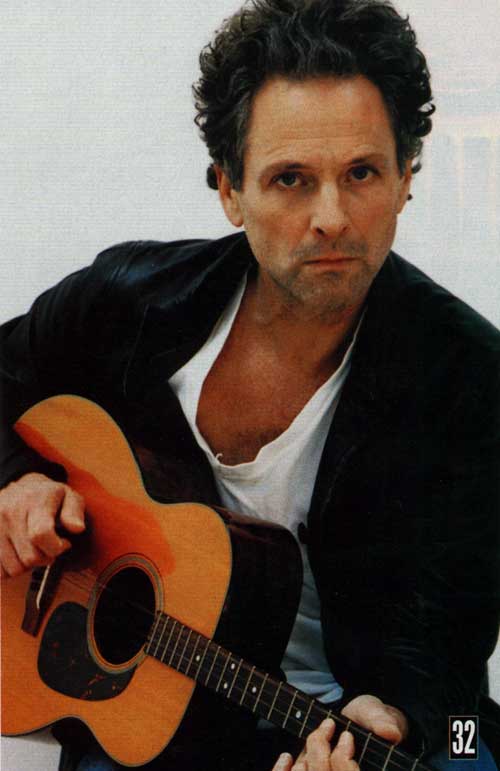
Lindsey Buckingham's Big Songs, Big Guitar, And Big Voice Shine On "Small Machine"

Music DVD Review: Lindsey Buckingham - Songs From the Small Machine - Live in L.A.


The most striking thing about Lindsey Buckingham's new Songs From the Small Machine - Live in L.A. concert DVD, is the revelation of just how amazing — yet underrated — a guitarist Buckingham really is.

Both with Fleetwood Mac and as a solo artist, Lindsey Buckingham most often gets his props — and rightfully so — as a songwriter, and perhaps to a slightly lesser degree as a singer. But on this DVD, and particularly on the five solo acoustic songs that open the set, Buckingham really lets things rip on the guitar.

Thankfully, the camera work here wisely zeroes in on all the action. There are several close up shots that reveal Buckingham's intricate style of hard finger picking. But the best stuff comes when Buckingham is strumming like a maniac on songs like "Big Love," and especially during an intense version of "Go Insane," where he essentially turns the pop song inside out.

Who said acoustic sets at a rock concert were supposed to be for bathroom breaks? Don't tell that to Lindsey Buckingham.

By the sixth song, the shiny pop gem "Under The Sun," Buckingham is joined by his band for several songs from his great new Seeds We Sow album. Calling these "new songs from the small machine" (as opposed to the "big machine" that is Fleetwood Mac, and hence the DVD title), Buckingham likewise shows his gift for writing intelligent, well crafted pop and especially his ear for a great hook, to be as sharp as ever here. If anything, songs like "Stars Go Crazy" and "That's The Way Love Goes" are just a natural extension of the same smart pop sensibilities of his work with the "big machine."

But even on the Fleetwood Mac songs, Lindsey Buckingham finds new ways to keep things fresh. On "I'm So Afraid," the already bluesy song takes on an even more foreboding tone, thanks to an even slower arrangement, and a beautifully haunting vocal from Buckingham. The song also serves as the launchpad for another stratospheric guitar solo, and the camera once again captures Buckingham's unique picking technique up close.

The arrangements on other Fleetwood Mac classics like "Go Your Own Way" and "Never Going Back Again" are more familiar sounding. But Buckingham's strong vocals and guitar playing still make them standouts. The whispered vocal delivery on "Never Going Back Again" is particularly sweet. On "Go Your Own Way," he projects his vocals to the crowd at L.A.'s intimate Saban Theater as though he were playing a sold out arena.

The only bonus feature on Songs From the Small Machine - Live in L.A. is a new Lindsey Buckingham interview. But the concert itself is beautifully filmed — especially when the closeups reveal a few of the master's secrets. The Dolby Digital 5.1 sound mix is likewise flawless and squeaky clean.

In short, Lindsey Buckingham's Songs From the Small Machine - Live in L.A. is another home run from the fine folks at Eagle Rock.


This article was first published at Blogcritics Magazine.

Tuesday, December 6, 2011

Sting Gets Back To Business, And Back To Bass In Seattle

Concert Review: Sting's "Back To Bass" Tour, 12/5/11, At The Paramount Theatre, Seattle WA


Ever since concluding his big bucks reunion tour with The Police a few years back, it's been back to business as usual for Sting. Which, on his current tour, means it has also been "Back To Bass."

Sting is currently touring in support of his 25 Years retrospective boxed set, performing a hits-heavy set mainly in theaters and small venues with a relatively stripped down five piece band. During the first show of a two night stand at Seattle's Paramount Theater (on a freezing cold Monday night, no less), Sting and his band warmed up the crowd of adoring, mostly older fans with an energetic, well balanced two hour set drawing equally from both his solo work, and his back catalog with the Police.

Of course, this is Sting we are talking about here. Which meant that his "stripped down" band, still included two guitarists and a miniature string section (specifically, violin and fiddle).

The newer live arrangements of vintage Police songs like "Every Breath You Take," "Every Little Thing She Does Is Magic" and "Next To You," while certainly not lacking anything in the energy department, likewise tended more towards an adult-contemporary feel, than his classic eighties period as New Wave's favorite blond cop.

No matter though. With the help of a band that was nothing short of amazing, Sting and company still managed to turn the heat up enough on Seattle's wine and cheese crowd to make them forget the cold outside.

Fiddle player Peter Tickell turned in a couple of particularly jaw-dropping solos, and also re-created the soprano sax parts on songs like "Fortress Around Your Heart" perfectly, with help from Jo Lawry on violin (who also displayed her gorgeous five-octave range on backing vocals). The father-son guitar tandem of Dominic and Rufus Miller likewise had some fine moments (including a couple of cool solos from Dominic using a wah-wah pedal). Monster drummer Vinnie Colaiuta, a recent veteran of Jeff Beck's band, was a dead ringer for Stewart Copeland on the Police songs.

Sting himself often gets a sometimes deserved, but just as often unfair rap for pretentiousness, mostly because of his genre forays into everything from celtic to classical as a solo artist. At the Paramount, Sting was the antithesis of the stuffy performer he is often made out to be, engaging the audience with a humorous sing-along on the ready made for Seattle "Heavy Cloud, No Rain," and name dropping Toby Keith's cover of his country themed divorce song "I'm So Happy I Can't Stop Crying," while adding a disclaimer about Keith's politics.

Sting was likewise in fine voice, showing no signs of his age on vocals, and hitting all the right notes on his signature bass. By the end of the night, Sting had the crowd eating from the palm of his hand, sending them warmly singing their "Whoah-oh's" into the cold Seattle night with an acoustic version of the Police's "Message In A Bottle."

This article was first published at Blogcritics Magazine.