Tuesday, June 30, 2009

Wilco: The Album...To Beat For Best Of the Year

Music Review: Wilco -
Wilco (the album)

When I first learned very early on this year that Bruce Springsteen, U2, and Bob Dylan among others would be putting out new albums, I was so excited that I jumped the gun a bit and began making early plans for my "best albums of 2009" list. When Springsteen and U2 didn't quite deliver the records I'd hoped for -- and even Dylan's album, though quite good, wasn't exactly Modern Times great -- my optimism however soon turned to worry.

With their new album, Wilco are making me breathe quite a bit easier.

That said, I have to admit to being a bit of a Johnny-Come-Lately to the Wilco party. My first real exposure to Wilco was the band's 2002 Yankee Hotel Foxtrot album and tour, both of which initially confounded me more than anything else.

I've since come around. But my initial impression was that yes, Jeff Tweedy wrote some interesting songs, and that the guys could definitely play. But something was still missing. On the followup album A Ghost Is Born, I thought they were getting closer though. I played the living crap out of that record's Kraftwerk meets Crazy Horse opus "Spiders (Kidsmoke)" for one thing.

For me though, all the pieces really began to fit with 2007's Sky Blue Sky, and especially the live Wilco show I saw that same year. The missing part of the puzzle, as it turned out, came in the form of one Nels Cline. A two-ton monster of a guitarist if there ever was one, Cline also happened to fit this band like a glove.

As much as Cline's unrestrained bursts of feedback laden guitar might seem to be a rather odd compliment to the often sweet, understated songwriting of Tweedy -- the fact is that it really works.

Look no further for evidence of that than on Wilco's fabulous Ashes Of American Flags concert documentary. On that DVD, Cline shreds the living crap out of his instrument on songs like "Impossible Germany," "Handshake Drugs," and "Via Chicago." But it is always in compliment towards, rather than a distraction from, Jeff Tweedy's songs.

So on the surface, Wilco (the album) feels like this band's grab for the big, brass ring. It is neither the quieter, return to basic songcraft that (Cline's incendiary playing on that album aside) Sky Blue Sky felt like, nor the more ambitious experimental sounding record that was Yankee Hotel Foxtrot. Rather, it is both. Wilco (the album) in fact, kind of falls into the category of all of the above for this band.

First and foremost, the songs are great.

"Wilco (the song)" kicks things off with a tongue-in-cheek sort of vibe that reminds you immediately that as good as these guys may know they really are, they are not so good as to actually take themselves too seriously. Here, they go so far as to remind the listener that "this is a fact you need to know/Wilco will love you baby."

The track most early previews on this album have raved about though is "Bull Black Nova," and for good reason. Musically, "Nova" is kind of like the kid brother to the band's earlier "Spiders (Kidsmoke)." It mines the same path of Kraftwerk-ian metronomic synths, mixed with blasting, chaotic guitar courtesy of Cline.

Meanwhile the lyrics are something else, as they seem to describe transporting a dead body in a "Bull Black Chevy Nova." The effect is an unnerving one as Tweedy describes the "blood in the sink, blood in the trunk" and, with voice rising all the while in intensity, how "I'm sorry as the setting sun."

As great as "Bull Black Nova" is, the standout track on Wilco (the album) is "You Never Know." This is the sort of song that would be the biggest hit single of the summer, if only Top 40 radio still had room on their playlists for great power pop songs in the seventies rock mold of the Raspberries or Badfinger.

"You Never Know" has everything a great pop song should have. Tweedy's vocal starts out like something straight out of "Bang A Gong" era Marc Bolan, and winds up with gorgeous harmonies straight out of Traveling Wilburys territory in the chorus. Speaking of the Wilburys, Nels Cline pays rather obvious homage to George Harrison here with just about the shortest, sweetest to the point guitar break this side of "My Sweet Lord."

"You Never Know" also has a hook that wont quit. The lyrics put a nice, sunny spin on our current economic woes ("Every generation thinks its the worst/ thinks its the end of the world/ It's a dream down a well/ it's a long heavy hell/ I don't care anymore"). If there were any justice in this world, this song would be huge.


On "Country Disappeared," Tweedy turns a sweet folkish ballad into a prayer for the country. "Wake up, we're here/ It's so much worse than we feared/ there's nothing left here," Tweedy sings. "I won't take no/ I won't let you go/ All by yourself/ I know you need my help."

As if to underscore the point, Tweedy proclaims "I'll fight, I'll fight, I'll fight for you I will," on the obviously titled "I'll Fight." "I'll die alone/ on some forgotten hill/ abandoned by the mill."

Aside from just how great the band sounds here, Jeff Tweedy's growth as a songwriter is one of the greatest joys of listening to Wilco (the album). The songs are not are just topical. Tweedy's storytelling skills are also razor sharp on songs like "Bull Black Nova" and "Sonny Feeling," whose main characters problems include the fact that "she knows nothing of Eminem's suburban gangster flow." Great stuff all around here.

I love this record. For best album of the year, this is also the one to beat.

Monday, June 29, 2009

The Woodstock Experience Part Five: Johnny Winter

Music Review: Johnny Winter - The Woodstock Experience

This summer marks the 40th Anniversary of 1969's historic Woodstock Music And Arts Festival. As part of the celebration, Sony/Legacy Recordings is releasing a limited edition series of deluxe, double disc recordings by five of the artists whose performances at Woodstock changed the world.

This is our fifth and final review on
that series.

Johnny Winter was one of the lesser-known acts chosen to perform at the time promoters were putting together the lineup for Woodstock back in 1969. At the time, the Texas blues guitarist was primarily known for two things -- being an albino, and the fairly strong buzz he had been generating largely via word of mouth from music critics and scenesters.

Johnny Winter of course eventually went on to much bigger and better things. He took his rightful place amongst the upper-tier of the best regarded rock guitarists, and by the seventies -- first with his group Johnny Winter And, and later with albums like Still Alive And Well -- he was also headlining arenas. Brother Edgar Winter would also ride Johnny's coattails to success with his own hits "Frankenstein" and "Free Ride."

Reportedly in ill health these days, Johnny Winter nonetheless still regularly gets out there to play shows. But for the past decade or so, he's retreated from the bright lights of rock stardom to pursue a lower key profile as more of a blues purist.

In 1969 though, Johnny was quite the sight to see with his flowing white hair, and some equally white-hot blues/rock guitar slinging to match. It's easy to forget that Johnny Winter even played at the Woodstock festival today though. He wasn't in the original movie, although he does show up on the bonus disc of the recently released Woodstock 40th Anniversary DVD box.

As part of the Woodstock Experience discs being released by Sony/Legacy on Tuesday, Johnny Winter's complete set at the legendary 1969 festival is paired on a double-disc with the Texas guitarist's 1969 debut album for Columbia. As with the other Woodstock Experience packages, there are no bonus tracks or extras on the Johnny Winter album, although the original album art is recreated in loving detail, right down to the red Columbia logo on the disc itself.

Listening to Winter's Woodstock set, you can almost imagine how much bigger he might have been had the performance footage been included back when the film documentary was first released. If anything, Winter's blues based, guitar heavy rock immediately reminds you of Alvin Lee and Ten Years After, who became huge stars after their own performance of "I'm Going Home" in the movie.

Backed by the standard rock lineup of guitar, bass, and drums, Winter's guitar -- and especially his slide playing -- does most of the talking here on blues workouts like "Mean Town Blues" and "Leland Missisippi Blues," a standout track from his debut album. Nothing too fancy here -- just a shit hot blues guitar player backed by a tight ass little blues band.

Johnny is joined by his brother Edgar on sax and piano for the last several songs of the set, including "I Can't Stand It" and a ten minute version of "Tobacco Road." The latter song would become a staple of Edgar's own concerts in the seventies, particularly on his live double album Roadwork, with his band White Trash.

In this performance recorded so many years prior, Edgar is already beginning to work out the trademark scream and sax solos he would later make famous on the version still to come. Hearing it here in a more embryonic state with brother Johnny is one of the true delights of this set. Edgar's prolonged screams towards the end still produce chills even now.

Edgar sticks around for "Tell The Truth," and wisely turns the spotlight back to brother Johnny who turns in a lightning fast guitar solo. This soon makes way for some nice scat singing, and more of those trademark screams by Edgar. Although the new DVD box does finally include Johnny Winter, I'd loved to have seen this stuff included as well. Maybe next time (in ten or so more years). The band closes out the set with a barn-storming "Johnny B. Goode" -- a song which Johnny Winter would make a trademark of his for years to come.

The pairing of the Woodstock set with Johnny Winter's self-titled 1969 debut album here points out the two sides of this multi-talented guitarist. Where the Woodstock set is pretty much all rock and roll fireworks -- especially during the parts with Edgar -- the album is comparatively lower key.

Not that the album doesn't have any number of explosive guitar solos -- because it most certainly does. From the opening track "I'm Yours And I'm Hers," Winter breaks out the slide and gets right down to business. But where the live show accents the rock, this album is clearly focused on the blues -- and on tracks like "Be Careful With A Fool," Winter shows he can be just as tasty in the studio as he is flashy on the concert stage.

It's an audacious debut record which at the time signaled the arrival of a major new talent. Basically Johnny Winter puts on a blues-rock guitar clinic here. However, he never strays too far from the blues in doing so.

On the song "Dallas" he shows himself to be as comfortable with the delta style of a Lightnin' Hopkins as he is with the Chicago blues of the following song, a harmonica accentuated version of "Mean Mistreater." Here, even the recording itself sounds as appropriately muddy as, well, you know...

Truth be told, it's probably been something like twenty years since I listened to Johnny Winter's first record, and I'd almost forgotten how great this album really is. Thanks to Legacy Recordings for the reminder -- not to mention the bonus treat of hearing the complete Woodstock set for the first time.

This set, along with the rest of the Woodstock Experience packages arrive both digitally and in stores on Tuesday June 30.
The Woodstock Experience Part Four: Janis Joplin

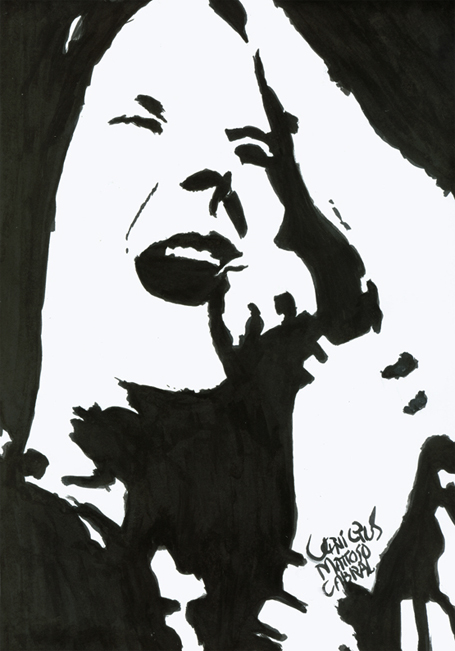
Music Review: Janis Joplin - The Woodstock Experience

This summer marks the 40th Anniversary of 1969's historic Woodstock Music And Arts Festival. As part of the celebration, Sony/Legacy Recordings is releasing a limited edition series of deluxe, double disc recordings by five of the artists whose performances at Woodstock changed the world.

This is part four of our series on
these albums.

When I was thirteen years old, I saw Janis Joplin play at an outdoor concert held at Seattle's Sicks Stadium, the former home of our then pro-baseball team the Seattle Pilots. Jimi Hendrix also played there just a few weeks later -- a show I also saw. Tragically, both would be dead just a few months later.

I was also able to meet Janis at that show. As the helicopter flew her in and she walked past the fence separating the makeshift backstage area from the crowd, I shouted over to her, "hey Janis! why weren't you in the movie Woodstock?"

The stuff a kid meeting one of his idols thinks to ask given the opportunity, right? Taking a swig from her bottle of Southern Comfort, she looked back at me and replied, "probably because I didn't do the editing."

That mistake has now thankfully been rectified.

Janis is finally featured on The Woodstock Experience, a double disc set coupling her complete Woodstock performance, with her 1969 album I Got Dem' Ol' Kozmic Blues Again, Mama!

As with the other artists in this series, the package on Kozmic Blues recreates the original album jacket in miniature form, right down to the red Columbia logo on the disc. There's nothing really fancy here, nor any extras like bonus tracks. But it's all still very nicely done.

Kozmic Blues is arguably Janis Joplin's most underrated album. There were not really any huge hits here, such as there was with Cheap Thrills ("Piece Of My Heart") before it, or with Pearl ("Me And Bobby McGee") after. But the album does feature some very nice work, and has more than its share of standouts.

The idea at the time was to re-position Janis as more of a mainstream solo act, following her time with psychedelic rockers Big Brother & The Holding Company -- a band who too often got a bit of a rub from some people as being too sloppy or otherwise somehow beneath Joplin's obviously monumental talent as a vocalist. As a fan, I never bought into that argument for a second.

So Janis was recast as a white, but otherwise classic R&B act. They put this huge soul band behind her -- one who also could very obviously play too -- complete with a horn section. And what was once a very earthy blues singer backed by an even rawer band, became something more akin to a rhythm and blues act in the mold of Tina Minus Ike. Or maybe Sam and Dave...and Janis. Anyway, something like that.

In the long run, the public didn't buy this version of Janis, and by the next year she was back to a five piece band on the more rock oriented Pearl album. Still, Kozmic Blues does have its moments.

On "One Good Man," the guitar, by lone Big Brother holdover Sam Andrew, is brought to the forefront just enough to recall the more loosey-goosey groove of the Cheap Thrills days. Oddly, this is one of very few tracks on this album where the guitar is at all prominently featured.

"Try (Just A Little Bit Harder)" also features a classic Janis vocal, and probably should have been a bigger hit than it was. The title track is a slow cookin' blues cut that builds in intensity, and is probably the one track where the big horn arrangement adds, rather than detracts from, the power of the actual song.

Other tracks on the album include a cover of the Bee Gees' "To Love Somebody," and the bluesy "Little Girl Blue." There's also something of an attempt to recreate Janis' signature version of Willie Mae Thornton's "Ball And Chain" in "Work Me Lord." This works for awhile, but it eventually collapses under the weight of a horn arrangement that overpowers everything else, including the vocal and finally, the song itself.

Janis' live performance at Woodstock -- also with the big soul band heard on Kozmic Blues -- is likewise kind of a mixed bag. While it's definitely great to finally be able to hear it, this still comes from a period where Janis was in a bit of a career and artistic flux, and it shows at times here.

At first though, Janis and the band come on like gangbusters.

With the band cranked and the horns blaring away on "Raise Your Hand," Janis herself belts out the song with all of the passion that made her such a huge star back then. For a second or two there, you get the feeling this is gonna' be the same sort of high-energy treat that Sly And The Family Stone's set was. Janis and the band continue this frenetic pace through Nick Gravenites' "As Good As You've Been To This World."

By the end of that song though, Janis sounds like she's already running a little out of breath. She still sounds great on the Bee Gees' "To Love Somebody," but you can tell she's also slowing down, if even by just a touch. Even so, her voice still sounds pretty damned amazing.

The other rub here though is with the band itself. Great musicians that they are, there are just too many of those horn-heavy arrangements here. They also play at such a breakneck pace, that Janis occasionally seems to have a tough time keeping up with them.

That pace slows on a meandering arrangement of "Summertime" -- a song which is normally one of Janis' show stoppers -- but here again it's a case of too much band, and not enough Janis. To her credit, Janis still belts it out like a trooper though.

But on a cover of Otis Redding's "Can't Turn You Loose," Janis is nowhere to be heard at all. When you have an instrument as great as the voice of Janis Joplin, why would you emphasize anything else?

The set closes with versions of the Big Brother staples "Piece Of My Heart" and "Ball And Chain" which although decent sounding enough, come nowhere near the classic versions heard on the Cheap Thrills album. The former, once again, is just too busy with the horn arrangements and sounds rushed as a result. The latter suffers from too many starts and stops by the band, in comparison to the slow building intensity of the Big Brother version.

For historical value though, the performance here certainly serves its purpose well enough. It's just hard not to make comparisons to the already familiar versions of some of these songs, particularly given the rather radical musical left turn Janis took with the horns and with the bigger band.

The Woodstock Experience series, including this set by Janis Joplin, arrives both digitally and in stores on Tuesday June 30.

Next up, we close out our series with Johnny Winter.

Sunday, June 28, 2009

The Woodstock Experience Part Three: Sly And The Family Stone

Music Review: Sly And The Family Stone -
The Woodstock Experience

This summer marks the 40th Anniversary of 1969's historic Woodstock Music And Arts Festival. As part of the celebration, Sony/Legacy Recordings is releasing a limited edition series of deluxe, double disc recordings by five of the artists whose performances at Woodstock changed the world.

This is part three of our series on those recordings.

Of all of the performances that took place at Woodstock, Sly And the Family Stone's amazing set is simply in a class all its own.

A notoriously hit and miss act at the time, Sly had one of the worst reputations in the business for showing up late or not at all to his shows back then. But when the band actually would show, they usually came to play -- and Sly And The Family Stone were definitely firing on all four cylinders at Woodstock.

In fact, to this day one of the most iconic images from the Woodstock film remains the one of Sly, bathed in blue light, with his arms outstretched and the white fringe flying at the close of "I Want To Take You Higher." There are many memorable images from that historic weekend -- but that one just really stands out as a signature snapshot of what Woodstock was all about.

After forty years, fans now have the opportunity to experience that entire amazing performance as part of Sony/Legacy's Woodstock Experience series. Perhaps most amazing is the fact that this represents the first official live album ever from Sly And The Family Stone -- again coming some forty years after the fact.

The Woodstock Experience couples that stunning performance with 1969's Stand! -- arguably Sly's best album. Once again, Legacy has done a very nice, if no-frills job with this.

There's no extras or bonus tracks. Just a nicely done repackage of the original album, including a miniature reproduction of the original jacket, and the old yellow Epic Records label on the CD (I love the way Legacy's been doing that with the labels in this series).

Stand! is still just a great, great record, even all these years later. Listening to songs like "I Want To Take You Higher," "You Can Make It If You Try," and "Everyday People" today, is like getting a quick history lesson in just where a great deal of the funk of the seventies and eighties really began -- not to mention where a great majority of hip hop acts got their samples from (James Brown notwithstanding).

Before Michael Jackson and Prince kicked down the door on the color barriers in music altogether with their MTV videos, Sly And The Family Stone fused rock, funk, R&B, and just about everything else together to make some of the most groundbreaking music of the sixties. Sly And The Family Stone were also both bi-racial, and equally gendered in make up twenty years before Prince had his Revolution. In other words, the girls got to play too in this particular "Family Affair."

In addition to the better known hits, Stand! also includes the thirteen minute instrumental jam "Sex Machine," where the Family Stone are able to show off their considerable chops and just how tight of a band they really were. Stand! was also the record where Sly began to incorporate social concerns into his songs.

In that regard, this album's "Don't Call Me Nigger Whitey" was a precursor to the sort of themes Sly would further explore on the nearly-as-great followup album Theres A Riot Goin' On. But it is Stand! that remains Sly's masterpiece -- at least in this writer's humble estimation.

That said, the remastered version of Stand! that Legacy did when they overhauled Sly's catalog a few years ago is probably still the better package if that album is all you are looking for. But this is pretty nice too, and of course, here you get that long-sought after complete concert from Woodstock.

And man what a concert!

Most fans are already of course familiar with how the whole "Music Lover/Higher" medley brought the entire 600,000 strong house down in the concert film. That remains the undisputed highlight here as well. But on the way to getting there, you get very a high energy buildup to it that is jam -packed with hits like "Everyday People," "Sing A Simple Song," "Everyday People," and "Dance To The Music."

The band plays like a house of fire throughout -- the horn section crackles with energy, and the rhythm section -- particularly the amazing Larry Graham on bass -- is as tight as a drum. On "You Can Make it If You Try," Graham's playing is simply amazing, playing his parts like a lead instrument, especially when the band slows the song down to a bluesier groove. The horn parts are also pretty sweet, but Graham creates a bottom so deep you could almost fall into it.

Of course, the whole "Music Lover/Higher" segment remains the high point here though. When Sly exhorts 600,000 people into a singalong, the crowd is at first a little reluctant to join in, but by the end of the thing, he turns the party clean out. To this day, it remains the single most memorable performance from the Woodstock film.

Thank God, the entire thing is finally available, along with the rest of these historic performances courtesy of The Woodstock Experience. The entire series will be available both digitally and in stores this Tuesday, June 30.

Next up in our series will be Janis Joplin.

Saturday, June 27, 2009

The Woodstock Experience Part Two: Santana

Music Review: Santana -
The Woodstock Experience

This summer marks the 40th Anniversary of 1969's historic Woodstock Music And Arts Festival. As part of the celebration, Sony/Legacy Recordings is releasing a limited edition series of deluxe, double disc recordings by five of the artists whose performances at Woodstock changed the world.

This is part two of our series on those CDs.


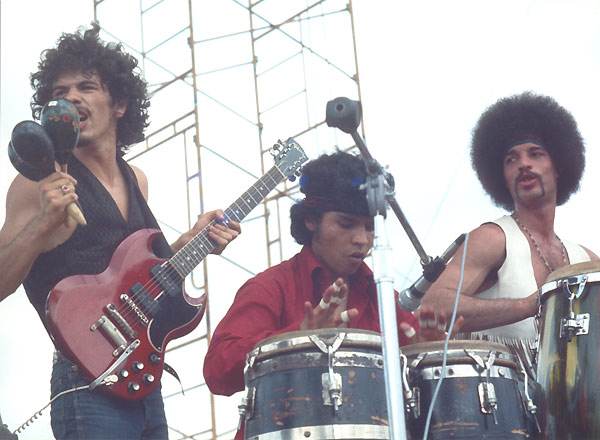
Although it may seem hard to believe now, Santana was virtually unknown outside of the San Francisco area when they performed at the 1969 Woodstock Festival.

With only a single album to their credit at the time, Santana was one of a handful of promising, but lesser known acts chosen by promoters to perform at the three day rock bash alongside such megabands of the day as The Who, Jimi Hendrix, and Jefferson Airplane.

Santana's unknown status of course changed overnight with the band's historic performance. Along with bands like Sly And The Family Stone and Ten Years After, Santana in fact proved to be one of the true breakout acts of the festival.

Their roughly fifty minute set proved to be a career changer, particularly once the Woodstock film captured their electrifying version of "Soul Sacrifice" a year later. By the time they got to Woodstock, Carlos and company were pretty much set for life. The followup album Abraxas and it's hit version of Peter Green's "Black Magic Woman" merely sealed the deal.

On the Woodstock Experience, Santana's historic Woodstock performance is captured in its entirety for the very first time, and paired on a double disc with the band's 1969 debut album (often referred to as the "lion album" because of it's striking black and white cover art).

The most striking thing about hearing these two discs together, is how close to the vest these guys actually played it. Make no mistake, this is a great performance -- it is every bit as electrifying as the version of "Soul Sacrifice" that's become permanently etched into the memories of anyone who has seen the film. It's also just that right touch of a bit more raw sounding.

But the fact is, outside of a few sound glitches in the vocal mix (which seems to be a recurrent problem with this series), hearing the two discs back to back there just isn't that much difference between them. Well, at least outside of the occasional onstage banter ("we're in New York, right?").

That said, the band scorches its way through their alloted fifty minutes here. The percussion unit -- led by drummer Michael Shrieve and also featuring the congas and timbales of Jose Chepito Areas and Micheal Carabello -- in particular is quite remarkable. There really has never been anything quite like these guys either before or since -- a fact all the more amazing when you consider Shrieve was just a teenager at the time.

As on the original album, the song "Evil Ways" merely serves as a sort of pop tune bridge between the furious sounding stew of percolating latin rhythms heard here. Above all of this, keyboardist Gregg Rolie and bassist Dave Brown (whatever happened to that guy I wonder?), get in their share of tasty licks. But this is pretty much Carlos Santana's show, and the great guitarist proves why he went on to be considered one of the best ever in spades here.

Shrieve's drum solo on "Soul Sacrifice" however remains the real show stopper. It's hard to believe Shrieve was merely sixteen years old here -- the kid is freaking amazing. But Carlos aside, that one solo probably did as much as anything else they did at Woodstock to put Santana on the map for good. To this day, it's a defining moment of the Woodstock Experience, and of its time.

The addition of Santana's debut album here compliments the actual live performance more than possibly any other set in the series simply because, as I already mentioned, the two pieces are really like different sides of the same coin.

There's really not much point in rehashing a record that millions already own, except to say that along with Abraxas and their third album, this is really one of the truly essential Santana albums. No offense to the latter day mega-selling Supernatural album. But this is really what this band was all about. For one thing, they actually were still a band, rather than merely a vehicle for Carlos.

As with the other packages in the Woodstock Experience series, the concert is really the hook here. That said, they do the usual nice job with the original album, recreating the original cover and the red Columbia logo on the disc itself.

But if you're going mainly for the studio recording, Legacy has a far superior remastered version already out there, replete with the usual bonus tracks and the like (none of which are here).

Nonetheless, the live Woodstock performance captured here -- occasional (and in fairness, expected given the age of the recording) sound glitches aside -- make this release a must for any self respecting Santana fan.

The Woodstock Experience series arrives in stores on June 30.

Next up in our series will be Sly And The Family Stone.

Friday, June 26, 2009

The Woodstock Experience Part One: Jefferson Airplane

Music Review: Jefferson Airplane - The Woodstock Experience

This summer marks the 40th Anniversary of 1969's historic Woodstock Music And Arts Festival. As part of that celebration, Sony/Legacy Recordings is releasing a limited edition series of deluxe, double disc recordings by five of the artists whose performances at Woodstock changed the world.

Dubbed
The Woodstock Experience, each double CD set pairs a classic 1969 album from the featured artist, along with their full festival performance. All of the concert recordings -- by Jefferson Airplane, Janis Joplin, Johnny Winter, Sly And The Family Stone, and Santana -- appear on these CDs in their entirety for the first time ever. All are packaged in eco-friendly sleeves, that include a mini-version of the original album cover and a 16 X 20 inch double-sided fold-out poster.

With this series, which we are also calling
The Woodstock Experience, we will be reviewing each of these commemorative sets

1969 was a strange year for the Jefferson Airplane.

Not only did the iconic band play at Woodstock (they were actually the first to sign on) -- they also released their final album with what most fans agree is their classic lineup, Volunteers.

They would close out the same year by playing the notorious Altamont festival -- the free "Woodstock West" headlined by the Rolling Stones which became as infamous for its darkness and murder, as Woodstock was for its peace, love, and music. But by that time, the Airplane themselves were a band already in its own considerable state of disarray.

By contrast, Jefferson Airplane's performance at Woodstock was a triumph, even if it was a stoned one. On the just released Woodstock Experience, that complete performance is captured for the first time, and coupled with that same original band's great Volunteers swansong album.

Although there's nothing really new to offer fans on the Volunteers part of this set (mainly because there is already a mostly superior remastered recording available), the repackaging here is still nicely, if modestly done. The album cover is reproduced in a nice mini sleeve, right down to the disc itself which comes in beautiful, 1969 RCA Records vintage orange. Nice touch there.

The music itself has also aged quite well. Opening and closing with "We Can Be Together" and "Volunteers" respectively -- the band rocks ferociously as Grace Slick and Paul Kantner bark out their incendiary call to revolution with lines like "up against the wall, motherfuckers."

Even though the two songs are the ones most people remember from the album, they are essentially one and the same. Marty Balin, who would later become better known for his love ballads, is also in fine rocking form here as he screams "Got a revolution" on the title track.

Lesser known than those two tracks however are the tracks spotlighting guitarist Jorma Kaukonen and bassist extraordinaire Jack Casady. Kaukonen's "Good Shepard" features some of his finest wah-wah guitar playing on record (not to mention a damn fine vocal), as Casady's spellbinding bass runs circles around it. On Grace Slick's little remembered "Hey Frederick," the Hot Tuna pair likewise turn a skeletal song idea into an improvisational wonder of jamming goodness.

The Woodstock performance captured on this set is likewise notable, first of all for it's length. Unlike the other bands captured on these Woodstock Experience CDs, the Airplane's set spans part of the first disc, as well as all of the second.

Heard for the first time here are concert staples like "The Other Side Of This Life," where Casady's thunderous bass is wisely put out front and center in the mix. The band comes out as hot as the sun that was just coming up, as Grace declares the band will be playing "morning maniac music."

They had stayed up all night waiting for their turn to play, and on the just released DVD deluxe boxed-set edition of the film, Grace in particular also looks pretty stoned.

Although the performance here doesn't always quite measure up to Jefferson Airplane's great 1969 live album Bless its Pointed Little Head, the band still sounds great -- especially Kaukonen, Casady and sixties session keyboard great Nicky Hopkins. The one sore spot here is in the vocal mix, which at times sounds like it's coming through a transistor radio -- or a pair of those iPod ear thingies. The sound here is tinny to the point of being downright irritating.

But at least they got those Casady bass runs down right. Casady sounds amazing on the hit "Somebody To Love," although Grace is already running out of gas by the time of this, the second song of the set. To her credit, she does sound a lot better on the version of "White Rabbit" which comes later. But by the time of "3/5 Of A Mile in 10 Seconds," Casady and Kaukonen pretty much have taken over anyway, with the rest of the band doing whatever they can just to keep up.

For his part, Marty Balin does the most admirable job, keeping pace with Kaukonen and Casady on a considerably faster paced version of "Plastic Fantastic Lover" than the one found on Pointed Head.

By this time, Kaukonen and especially Casady are playing in pretty much their own universe, and blowing away anything in their way. You can start to see why these two guys would eventually just end up doing their own thing in Hot Tuna.

The set slows down just a bit with the Airplane's version of "Wooden Ships," the song made famous by Crosby Stills & Nash. But it picks right back up with a raucous version of "Volunteers," which finds Balin in particular preaching the revolution to the morning maniacs like he really means it.

Here again, the sound rather frustratingly drops off in places. But the band sounds so good, that even Grace appears to wake up for this one. This continues on a punked-up version of the minor hit "Ballad Of You & Me & Pooneil." And don't look now, but Casady gets a filthy sounding little bass solo here.

So this is mainly a case of ebb and flow in terms of performance. In other words, it's fairly typical of the west coast psychedelic music of the period, and especially of the Airplane themselves in a live setting. It doesn't always work -- and the sound mix gets in the way more often than it should. But when it does, the Airplane approach greatness much more often than not.

The Woodstock Experience sets arrive both digitally and in stores on June 30.

Next up for our series will be Santana.

Thursday, June 25, 2009

Never Can Say Goodbye - Rest In Peace Michael (1958 - 2009)
Read my news article at Blogcritics Magazine