Steven Wilson And Aviv Geffen Reunite On Blackfield's Welcome To My DNA
Music Review: Blackfield - Welcome To My DNA
Welcome To My DNA, the third album in the on and off collaboration between Steven Wilson and Israeli singer/songwriter Aviv Geffen known as Blackfield, is a bit different from its two predecessors.
Wilson is of course, much better known to music fans in the western hemisphere as the creative mastermind behind modern progressive giants Porcupine Tree, and as the successful producer of such projects as the ongoing remastering of King Crimson's back catalog. Geffen — although far less known in this part of the world — is a huge pop star in his own right in his native Israel (where he is known as much for his outspoken political views, as he is for his music).
Coming from my own perspective as an admittedly diehard fan of Wilson's work with Porcupine Tree, Blackfield's albums have always represented a refreshing, if slightly more introspective and melancholic departure from his heavier records with PT. Aviv Geffen's role, to me at least, has always seemed to be more like a foil to Wilson, and a damned good one too — especially on songs like "Epidemic" and "Christenings" from Blackfield II.
This new album, on the other hand, is going to take some getting used to.
Geffen's presence on Welcome To My DNA is a lot more front and center for one thing. There's no more playing Andrew Ridgely to Steven Wilson's George Michael here. The music is also much lusher sounding (thanks to Wilson's densest production yet on a Blackfield album).
In fairness to Geffen (and again coming from my own somewhat admitted bias coming in as a Wilson fan), he largely rises to the challenge. Taking a much greater share of the lead vocals here (and from what I can tell, the songwriting as well), Geffen has lost most (but not all) of the distracting Israeli accent of past songs like "Epidemic." The new songs are mostly pretty strong too.
My lone complaint — and it's a relatively minor one — is that the mildly melancholic pop of previous Blackfield albums gives way to outright pessimism here, especially on darker songs like "Go To Hell" and the apocalyptic "Oxygen." The latter takes place in a world where "there's no oxygen left on our planet" and "everyone's sleeping with guns, someone's going to die."
Hey, I'm all for going green too. But can you say downer, dude?
But in the midst of all the gloom and doom, there are still some glistening modern alternative pop tracks to be found between the cracks. The first single from the album, "Waving" is a particularly good example. Steven Wilson is back up front on vocals and guitar for one thing. And despite the presence of some occasionally distracting strings, Wilson's ear for a pop hook remains as strong as ever (I'm assuming Wilson wrote this one).
Wilson's influence also comes through on tracks like "Blood" (the albums heaviest track, it plays almost like an outtake from PT's The Incident). The opening track, "Glass House," is another standout with a Steven Wilson lead vocal, and a string arrangement that manages the trick of being both subtle and lush at the same time.
Welcome To My DNA is Blackfield's most pronounced walk through the minefield of darkness and light yet. I suspect it will be growing on me for quite awhile.
This article was first published at Blogcritics Magazine.
Career Builder Search Engineering Basic Executive14 CareerBuilder Search Widget Searches jobs in CareerBuilder Virtual Career Builder - Jobs posting jobs to all submissions made by any User or third party whether in regards to the market.
Wednesday, April 13, 2011
Sunday, April 3, 2011
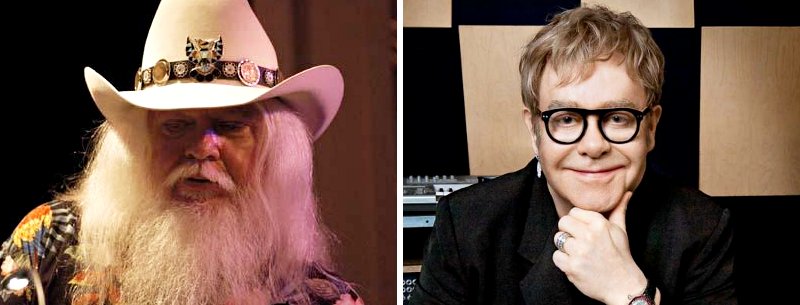
On Leon Russell And Elton John
So I have to honest here. The first time I ever heard of Leon Russell was as a pre-teen kid cruising my way through the pages of Circus Magazine, where I came across an an ad for Leon's debut solo album, which was at the time still called Can A Blue Man Sing The Whites?.
Cool title, I thought.
The album was of course eventually released as Leon Russell's self-titled solo album by Shelter Records (not sure whatever happened to that original title), and upon the first time I heard it, I was instantly enthralled.
But to be completely honest here, the first side of this album did absolutely nothing for me at the time. It was the second side that I really liked.
I liked Leon's weathered, sand-papery voice well enough, and the production of the record, populated as it was by the then very much in vogue Muscle Shoals sound of people like Delaney and Bonnie Bramlett, by way of British pop stars like Eric Clapton also went down very easy.
But to me, a few of the songs were still kind of lacking.
The second side however? Well, that was something else entirely.
Kicking off with "Delta Lady," and proceeding from there to scream through an entire side of New Orleans delta funk like "Pisces Apple Lady" and "Roll Away The Stone," this damn thing didn't let up for a second. I was instantly hooked. Anchoring it all was Leon's world weary rasp, set against some of the funkiest, Nawlins' honky tonk piano you will ever hear in this lifetime.
From this auspicious debut as an amazing solo artist who was clearly (at least to my pre-teen ears) one to be reckoned with, Leon went down hill fast, at least for my money he did. Latter albums yielding hits like "Tightrope," as well as ill-advised experiments like the country tinged "Hank Wilson Is Back" albums, just never completely recaptured the spark of that initial, brilliant debut album for me.
Of course, let's keep things in perspective here. I was, after all, still a kid.
Obviously, Leon also went on to much bigger and better things. His stint as the bandleader and "master of space and time" in Joe Cocker's extended Mad Dogs and Englishmen band is particularly memorable — and was obviously pivotal in establishing him as one of the true greats.
Still, as great as Joe Cocker's blues shouting on his version of "Delta Lady" is on the Mad Dogs double live album from 1970 (and it is pretty great), I'll take Leon's, less celebrated original version in a heartbeat.
Not long after, Leon stole the show at the all-star benefit Concert For Bangla Desh show, by kicking the living crap out of a blues medley including songs like "Youngblood" and "Jumping Jack Flash." The other headliners that night, which included no less than George Harrison, Bob Dylan and Eric Clapton didn't stand a chance against him.
Which brings me to last nights episode of Saturday Night Live...
Like Leon Russell himself, Elton John is a great artist, who I personally feel shot his creative wad fairly early in the game, but for entirely different reasons.
In my own opinion, Elton's first five or so several records represent his best work. But even these are spotty. For every truly brilliant moment like "Burn Down The Mission," "Rocket Man," and "Madman Across The Water, there are also ample amounts of filler on these records.
And once we get past Goodbye Yellow Brick Road, the filler eventually gives way to paint by numbers hit-making. By the time of the eighties, even that formidable, but equally formulaic well of catchy pop tunes began to run dry.
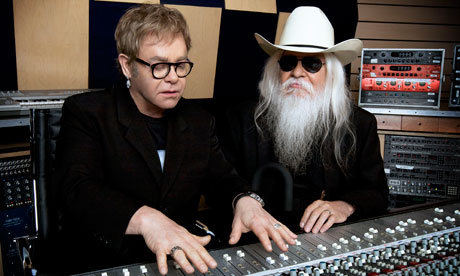
The thing is, even for all of his concessions to blatant, and occasionally schmaltzy commercialization over the years, Elton's heart still seems to be in the right place — and nowhere is this more apparent than in the way he has taken Leon Russell under his wing in the past year.
I'm not entirely sure what got Leon to the place where Elton found him — apparently broke and semi-destitute, in failing health, and with his status as a legendary artist largely forgotten by a brutally short-sighted music industry.
All I know, is Elton came to his rescue in the past year — both making an album and going on tour with him and inducting him into the Rock And Roll Hall of Fame — and Leon has acknowledged the debt in kind.
Elton John's heart has never been in question in that respect. Still, it was kind of sad to see Elton and Leon together on Saturday Night Live this past weekend, when the former hosted the show. I give Elton ultimate credit for bringing Leon along to what ultimately may prove to be his last dance before a nationally televised audience.
But seeing Leon as a shell of his former "master of space and time" self (his voice was barely audible in the sound mix) was also kind of sad — especially as Elton participated in skit after self aggrandizing skit hammering home the fact that he is a very famous, very wealthy, and very gay pop star.
Look, Elton, we get it. You're rich. You're famous. You're gay. We get it.
But thank you once again for reaching out to Leon Russell.
This article was first published at Blogcritics Magazine
Sunday, March 20, 2011
Marillion's Live From Cadogan Hall: Much More Than Just Another Acoustic Show
Music Review: Marillion - Live From Cadogan Hall (2 CD/2 DVD)
Marillion's third live concert DVD in recent years (dating back to 2005's Marbles On The Road) is a radical departure from both of its predecessors.
Filmed on the final night of the Less Is More tour — which took its name from Marillion's 2009 album of the same name, and featuring stripped down recreations of previously released songs from the progressive rock band's vast back catalog — Live From Cadogan Hall is still much more than the simple acoustic concert document you might think.
There is a whole lot more going on here than your standard two hours featuring a bunch of guys sitting on stools strumming folk guitars, and as a concert film, Live From Cadogan Hall leaves you with the inescapable feeling of having just witnessed something quite special.
The cathedral like ambiance of London's prestigious Cadogan Hall also makes for an appropriately elegant backdrop — especially during this DVD's many overhead shots showing a giant Christmas tree perched high above the band (the concert was filmed back in December 2009).
One of the first things you notice about this concert though, is the number of diverse, unusual instruments being played by the musicians on the stage.
These are things you wouldn't normally associate with a rock concert at all. There are xylophones, glockenspiels, dulcimers, celestes — there is even an autoharp which keyboardist Mark Kelly at one point claims to have built himself.
All manner of percussion instruments — bells, chimes, wooden blocks and the like — are also prevalent in this concert. They are not only played by monster drummer Ian Mosley either, but rather at one point or another by all five members of Marillion.
The thing is, all of these exotic instruments serve as far more than just window dressing for this concert. Marillion make fabulous use of all of them throughout, showing off their musical chops in ways that are only hinted at in the more grandiose progressive rock recordings the band is so much better known for.
From the oriental motifs of "Interior Lulu" to the lighter shades provided by Kelly's xylophone on "Hard As Love," this album is above all else a showcase for Marillion as a band of fabulous musicians. Even vastly underrated bassist Pete Trewavas gets a moment to shine here, turning in a series of fabulous sounding runs on "The Space," rumbling just underneath the tandem of Kelly's jazzy keys and Steve Rothery's gorgeous guitar.
Speaking of Rothery, although the guitarist is better known for the soaring, Pink Floydian heights he normally reaches with Marillion, his guitar work here is no less worthy. With the smaller arrangements heard here, Rothery is able to display a more subdued, but no less powerful and intricate side of his considerable guitar prowess. Lest anyone worry though, Rothery finally cuts loose with a ripping solo on the second disc closer "Three Minute Boy."
The setlist on Live From Cadogan Hall is also one sure to please Marillion fans. In addition to the entire Less Is More album — including new versions of everything from their earliest songs after Steve "H" Hogarth replaced original vocalist Fish in 1989 ("The Space") to more recent material from the group's 2008 double-disc Happiness Is The Road ("Wrapped Up In Time") — the second disc includes new takes on songs like "You're Gone," Marillion's near hit from the 2004 prog opus Marbles.
There aren't really any extras to speak of on this DVD, and that's okay. The 127 minutes of exquisite music here should be plenty enough to satisfy fans of the band, and for anyone willing to gamble twenty bucks, perhaps make them a few new ones as well.
The DTS Digital Sound Mix captures every musically nuanced highlight of this great concert (and there are plenty of them). The high definition video, while shot rather simply, is tasteful and straight forward, concentrating on the musicians onstage as well it should.
Marillion's Live From Cadogan Hall will be out on double disc DVD and Blu-ray on March 29, 2009, as well as on a double disc audio CD.
This article was first published at Blogcritics Magazine
Wednesday, March 16, 2011
Worst Neil Young Video Ever? You Decide...
Doing research for a book on Neil Young, unfortunately means also reacquainting yourself with some of his more embarrassing albums, such as 1986's particularly vapid Landing On Water. Here, "Touch The Night," a song that when played live with Crazy Horse circa 1984, could actually be mistaken for a slightly less great retread of "Like A Hurricane," is reduced to a typically overproduced, overdubbed eighties mess.
The drums are particularly awful (even though they are played by the great Steve Jordan). As for the video, well, get ready for Neil Young as Clark Kent.
But wait. I take it all back. This lovely little ditty, taken from the same album, may be the actual worst Neil Young video:
To V Or Not To V: All Hail Your New Reptilian Gods, Puny Humans
In case you missed it — and if the ratings for this season are any indication, most of you did — ABC wrapped up the second season of its once much-ballyhooed alien invasion series V this past Tuesday.
Officially, Tuesday's two months too early "Mother's Day" episode was only the season finale for this reboot of the eighties sci-fi cult classic. But few outside its most optimistic fans expect the show to be back next fall. In many ways, V was doomed from the start — a combination of both classic mishandling by the network (was the show ever around for more than a few weeks in between hiatuses?), and its own initial failure to live up to the enormous wave of hype preceding its 2009 debut.
Still, for pure balls alone, you've really got to hand it to these guys. If this really is the end of the road for V, then they have gone out on a full head of blood, guts, skin and cheese. In one of the more audacious risks ever taken on behalf of a show facing almost certain cancellation, the writers and producers of V threw the television equivalent of a last second, fourth and long, Hail Mary pass on Tuesday night.
Major characters, including lizard-loving teen drip Tyler, alien baby daddy Ryan, and repentant eighties alien Queen Bitch Diana (Jane Badler) all got killed off in the final thirty minutes (Diana's lizard spear through the gut was a particularly bloody scene for network TV). And in perhaps the ultimate "if we're going down, were taking you with us" move, the writers then proceeded to write the rest of us humans out of the show. As it turns out we weren't conquered by superior technology or military might at all, but rather by the "bliss" of alien lizard super crack.
Leading up to this, V likewise went for broke in trying to match the cheese of the original eighties series. They brought back original star Marc Singer — now sporting a Ming The Merciless Fu Manchu to boot!
There was even a brief eighties sliding split screen segueway from Tyler's death by rough alien sex aboard the mothership, to a "meanwhile, back on Earth" shot with Tyler's Mom Erika (Elizabeth Mitchell) being kidnapped by black hooded thugs. Earlier in the episode, a different set of kidnappers wore grey alien masks. Nice touch.
But there were also holes big enough to drive a fleet of saucers through. Like how for instance, does Ryan manage to sneak out of a fascist tent revival meeting full of lizard converts after her amphibious majesty Queen Anna demands their worship on bended knee?
Or, in V's biggest reveal, how does a full bodied, fifteen foot high lizard baby turn into a manufactured by skin, human clone of the shorter, much more petite Princess Lisa — who is still convincing enough to seduce the hapless romantic Tyler? Well, okay. The kid is dumb as a box of rocks and twice as gullible. Still, that is some serious skin shrinkage.
Cheese factor aside, this go-for-broke attitude is exactly what the finale needed if this is really it. Despite being mishandled by the network nearly every step of the way (and following an over-hyped, but underwhelming start), V really was starting to get good this year. One has to wonder if a third year might have brought a breakout season.
As it stands, V concludes with enough wide open spaces to fill several Grand Canyons. It could always still get picked up on cable by a network like SyFy or Chiller. Otherwise though, they have ended things up with an audaciously spectacular F.U.
All hail your new Reptilian Gods. Puny Humans.
This article was first published at Blogcritics Magazine.
In case you missed it — and if the ratings for this season are any indication, most of you did — ABC wrapped up the second season of its once much-ballyhooed alien invasion series V this past Tuesday.
Officially, Tuesday's two months too early "Mother's Day" episode was only the season finale for this reboot of the eighties sci-fi cult classic. But few outside its most optimistic fans expect the show to be back next fall. In many ways, V was doomed from the start — a combination of both classic mishandling by the network (was the show ever around for more than a few weeks in between hiatuses?), and its own initial failure to live up to the enormous wave of hype preceding its 2009 debut.
Still, for pure balls alone, you've really got to hand it to these guys. If this really is the end of the road for V, then they have gone out on a full head of blood, guts, skin and cheese. In one of the more audacious risks ever taken on behalf of a show facing almost certain cancellation, the writers and producers of V threw the television equivalent of a last second, fourth and long, Hail Mary pass on Tuesday night.
Major characters, including lizard-loving teen drip Tyler, alien baby daddy Ryan, and repentant eighties alien Queen Bitch Diana (Jane Badler) all got killed off in the final thirty minutes (Diana's lizard spear through the gut was a particularly bloody scene for network TV). And in perhaps the ultimate "if we're going down, were taking you with us" move, the writers then proceeded to write the rest of us humans out of the show. As it turns out we weren't conquered by superior technology or military might at all, but rather by the "bliss" of alien lizard super crack.
There was even a brief eighties sliding split screen segueway from Tyler's death by rough alien sex aboard the mothership, to a "meanwhile, back on Earth" shot with Tyler's Mom Erika (Elizabeth Mitchell) being kidnapped by black hooded thugs. Earlier in the episode, a different set of kidnappers wore grey alien masks. Nice touch.
But there were also holes big enough to drive a fleet of saucers through. Like how for instance, does Ryan manage to sneak out of a fascist tent revival meeting full of lizard converts after her amphibious majesty Queen Anna demands their worship on bended knee?
Or, in V's biggest reveal, how does a full bodied, fifteen foot high lizard baby turn into a manufactured by skin, human clone of the shorter, much more petite Princess Lisa — who is still convincing enough to seduce the hapless romantic Tyler? Well, okay. The kid is dumb as a box of rocks and twice as gullible. Still, that is some serious skin shrinkage.
As it stands, V concludes with enough wide open spaces to fill several Grand Canyons. It could always still get picked up on cable by a network like SyFy or Chiller. Otherwise though, they have ended things up with an audaciously spectacular F.U.
All hail your new Reptilian Gods. Puny Humans.
This article was first published at Blogcritics Magazine.
Wednesday, March 2, 2011
Bruce Hart's Pro-Wrestling Tell All Puts You In The Middle Of The Ring
Book Review: Straight From The Hart by Bruce Hart
Ever since the mafia like code of silence governing the secrets of professional wrestling known as "kayfabe" was broken once and for all back in the nineties, pro-wrestling insiders have been tripping all over themselves to publish their own "tell-all" books about the sports entertainment business.
Some of these books, such as Mick Foley's Have A Nice Day have proven to be both entertaining, and quite revealing. Many others however, written by such names as Hulk Hogan, Eric Bischoff and Ric Flair, have more often than not yielded little in the way of previously unknown details, and in a few cases have even proven to be more than a little self serving.
Bruce Hart's Straight From The Hart falls somewhere in the middle of these two extremes. On the one hand, this memoir of Hart's life as both a wrestling performer and "booker" (for his father Stu Hart's Stampede Wrestling promotion) offers a fascinating inside look at the pro-wrestling business, with all of its colorful cast of characters and equally cutthroat behind the scenes politics.
At the same time, Hart's book also serves as a forum for the author to air some of his own dirty laundry in public. Reading between the lines, it's hard not to see through Hart's often harsh criticisms of his more famous siblings (this is especially true in the case of his brother Bret "Hitman" Hart), as not being at least a little colored by his own professional jealousy. There also seems to be some genuine hurt there over the way that Bret Hart handled the matter of Bruce's ghost writing Bret's syndicated wrestling column for the Calgary Sun.
Mostly though, this book is a real eye-opener that makes for some very fascinating reading, even if you don't necessarily call yourself a wrestling fan. As the lesser known son of the Hart family — a professional wrestling dynasty that includes such famous names as Bret and Owen Hart, British Bulldog Davey Boy Smith and Jim "The Anvil" Neidhart — Hart's qualifications as an insider with unique insight into the inner workings of the squared circle are virtually without rival.
Some of his stories will of course be familiar to wrestling fans. The story of the infamous "Montreal screwjob" at 1997's WWE Survivor Series pay-per-view for example certainly represents familiar territory. As such, Hart's own retelling of what went down on the night that Bret Hart was "screwed" out of the WWE title in a real life conspiracy involving Vince McMahon, arch-rival Shawn Michaels and referee (and close friend) Earl Hebner offers few new details.
The death of his brother Owen Hart however, is a revealing look into how this tragedy (Owen Hart fell to his death while attempting to perform a stunt from the ceiling of an arena at a WWE pay per view show) shook his family and friends to their emotional core.
In Bruce Hart's account, Owen's death reads like the latest chapter in a long series of events that came to define the unique love-hate relationship which continues to exist between the Hart family and Vince McMahon to this day. Even as the family was grieving and pointing fingers of blame over the tragedy, there was also a strange business as usual aspect about it, that seemed to suggest the show must nonetheless go on. It makes for some of the most eye-opening reading in this book.
Elsewhere, Straight From The Hart reveals many of the insider details you'd expect from such a book. There are the humorous road stories about the "ribs" wrestlers often pull on one another as a way to amuse themselves during the otherwise mundane grind of traveling from city to city during their decidedly unglamorous "house show" tours.
There are also the darker stories about steroid use, and the accompanying rate of premature death amongst wrestling performers. This is most tragically illustrated here by the case of family friend and promising wrestling talent Brian Pillman, found dead in a hotel room at the age of 35.
Mostly though, Straight From The Hart is Bruce Hart's own story about growing up in one of the most powerful families in wrestling, complete with all the personal memories and anecdotes one would expect. To his credit as a writer, Hart also holds little back here — whether its dealing with the backstage politicking or with more deeply personal matters like the deaths of Pillman and his brother Owen.
There is plenty of dirty laundry here to be sure, and more often than not Bruce Hart seems to have some personal axes to grind. But the story is also told with the candid feel of reading from someone's diary. In that respect, Bruce Hart's Straight From The Hart puts you right in the middle of the ring.
This article was first published at Blogcritics Magazine.
Wednesday, February 23, 2011
Radiohead's The King Of Limbs: These Are My Twisted Thoughts
After having had the opportunity to live with Radiohead's new album The King Of Limbs for nearly a week now, I can honestly report that I still have semi-mixed feelings about it. Which, at least in the case of this particular band, is probably a good thing.
So, to borrow from the title of a song once intended for this album, these are my twisted thoughts.
You see, Radiohead is a band whose albums — especially the good ones — have this tendency to sink in rather slowly, taking deliciously insidious root in your brain and in your psyche, brick by brick. Likewise, the really great ones — as I suspect The King Of Limbs may well prove to be — reveal previously undiscovered new sonic textures that might have been initially glossed over with each new spin.
Like most really great music, once it gets under your skin, Radiohead's best stuff has this tendency to really take root and grow on you. The journey getting there can be occasionally difficult, and quite often is. But the final destination is almost always worth it in the end, and also one which much more often than not leaves you wanting more once it's over.
The King Of Limbs is no exception.
I also suspect that the physical CD release — which is still about a month away — will reveal even more new audio treasures of the sort only hinted at in the initial MP3 and Wav downloads that were released this past Friday. In the case of 2007's In Rainbows, this was certainly true and then some. The difference between that initial download release, and the actual CD that came later, was almost like hearing two completely different records.
The King Of Limbs marks Radiohead's full-on return to the layered, somewhat icy soundscapes of 2000's Kid A, and its 2001 companion album Amnesiac, following the fuller, more traditional rock instrumentation (at least comparatively speaking) heard on 2003's Hail To The Thief and 2007's In Rainbows. Not surprisingly, there are already rumors afoot of a similarly forthcoming companion to The King Of Limbs (based on the title of the closing track "Separator," and its lyric "if you think this is over").
On an initial few listens, the songs here have the sort of unfinished feel to them that — at least to the more casual listener — might sound more like a series of half-baked ideas, even though looped over the occasionally lush, often trippy, but nonetheless intriguing music that it is.
On the surface at least, there is nothing on The King Of Limbs with the same grand, sonic sweep as In Rainbows best songs like "Reckoner," nor a song anywhere as fully realized (at least in a traditional sense) as "All I Need," from that same album. Even so, there is a hypnotic quality to these songs that is almost impossible not to be sucked in by, particularly after repeated listens.
But the real star of The King Of Limbs is Thom Yorke's voice. As most fans of Radiohead's post-OK Computer work already know, Radiohead's lyrics have not always been one of the bands stronger suits.
When you can pick them out here, lines like "I'm such a tease and you're such a flirt" (from this album's "Little By Little"), make about as much sense as "yesterday, I woke up sucking a lemon" did the first time Yorke sang them on "Everything In Its Right Place" from Kid A.
Even so, the way that Yorke uses his high pitched, borderline eerie sounding falsetto as an instrument to not only compliment, but enhance the overall atmospheric textures of this album is nothing short of amazing.
When Yorke's lonely, seemingly just beyond the grave voice is looped over and over saying what sounds like "don't...hurt...me" during the song "Give Up The Ghost" for instance, I have absolutely no idea what he's singing about. But, and perhaps inexplicably, I still find myself drawn spellbound to it like a moth to a flame.
The first time I heard Yorke use his voice as an instrument like this was on 2000's classic Kid A, an album which, along with its companion piece Amnesiac, gave me initial cause to draw comparisons to what David Bowie did back in the seventies on his Berlin trilogy with Brian Eno.
That comparison largely still holds, by the way. But hearing Yorke's use of his voice as a unique compliment to the music on The King Of Limbs, I'm also reminded a lot of what Neil Young did on his highly under-appreciated eighties syntho-pop experiment Trans. It's probably not a coincidence that Yorke has been known to occasionally sneak in a few verses of Young's "After The Gold Rush" during the song "Everything In Its Right Place" at Radiohead's concert performances.
Much like Kid A (an album which The King Of Limbs, not coincidentally in my own opinion, shares much in common with), and to a slightly lesser extent, Thom Yorke's solo album The Eraser, the icy cool of Radiohead's new album will probably not bring any comfort to those fans who have been patiently waiting since the nineties for that followup to The Bends or OK Computer (neither of which are probably forthcoming anytime soon by the way).
But for right now, The King Of Limbs really feels like one of those great Radiohead albums.
This article was first published at Blogcritics Magazine.
After having had the opportunity to live with Radiohead's new album The King Of Limbs for nearly a week now, I can honestly report that I still have semi-mixed feelings about it. Which, at least in the case of this particular band, is probably a good thing.
So, to borrow from the title of a song once intended for this album, these are my twisted thoughts.
You see, Radiohead is a band whose albums — especially the good ones — have this tendency to sink in rather slowly, taking deliciously insidious root in your brain and in your psyche, brick by brick. Likewise, the really great ones — as I suspect The King Of Limbs may well prove to be — reveal previously undiscovered new sonic textures that might have been initially glossed over with each new spin.
The King Of Limbs is no exception.
I also suspect that the physical CD release — which is still about a month away — will reveal even more new audio treasures of the sort only hinted at in the initial MP3 and Wav downloads that were released this past Friday. In the case of 2007's In Rainbows, this was certainly true and then some. The difference between that initial download release, and the actual CD that came later, was almost like hearing two completely different records.
The King Of Limbs marks Radiohead's full-on return to the layered, somewhat icy soundscapes of 2000's Kid A, and its 2001 companion album Amnesiac, following the fuller, more traditional rock instrumentation (at least comparatively speaking) heard on 2003's Hail To The Thief and 2007's In Rainbows. Not surprisingly, there are already rumors afoot of a similarly forthcoming companion to The King Of Limbs (based on the title of the closing track "Separator," and its lyric "if you think this is over").
On an initial few listens, the songs here have the sort of unfinished feel to them that — at least to the more casual listener — might sound more like a series of half-baked ideas, even though looped over the occasionally lush, often trippy, but nonetheless intriguing music that it is.
On the surface at least, there is nothing on The King Of Limbs with the same grand, sonic sweep as In Rainbows best songs like "Reckoner," nor a song anywhere as fully realized (at least in a traditional sense) as "All I Need," from that same album. Even so, there is a hypnotic quality to these songs that is almost impossible not to be sucked in by, particularly after repeated listens.
When you can pick them out here, lines like "I'm such a tease and you're such a flirt" (from this album's "Little By Little"), make about as much sense as "yesterday, I woke up sucking a lemon" did the first time Yorke sang them on "Everything In Its Right Place" from Kid A.
Even so, the way that Yorke uses his high pitched, borderline eerie sounding falsetto as an instrument to not only compliment, but enhance the overall atmospheric textures of this album is nothing short of amazing.
When Yorke's lonely, seemingly just beyond the grave voice is looped over and over saying what sounds like "don't...hurt...me" during the song "Give Up The Ghost" for instance, I have absolutely no idea what he's singing about. But, and perhaps inexplicably, I still find myself drawn spellbound to it like a moth to a flame.
The first time I heard Yorke use his voice as an instrument like this was on 2000's classic Kid A, an album which, along with its companion piece Amnesiac, gave me initial cause to draw comparisons to what David Bowie did back in the seventies on his Berlin trilogy with Brian Eno.
That comparison largely still holds, by the way. But hearing Yorke's use of his voice as a unique compliment to the music on The King Of Limbs, I'm also reminded a lot of what Neil Young did on his highly under-appreciated eighties syntho-pop experiment Trans. It's probably not a coincidence that Yorke has been known to occasionally sneak in a few verses of Young's "After The Gold Rush" during the song "Everything In Its Right Place" at Radiohead's concert performances.
Much like Kid A (an album which The King Of Limbs, not coincidentally in my own opinion, shares much in common with), and to a slightly lesser extent, Thom Yorke's solo album The Eraser, the icy cool of Radiohead's new album will probably not bring any comfort to those fans who have been patiently waiting since the nineties for that followup to The Bends or OK Computer (neither of which are probably forthcoming anytime soon by the way).
But for right now, The King Of Limbs really feels like one of those great Radiohead albums.
This article was first published at Blogcritics Magazine.
Subscribe to:
Posts (Atom)
